7 Best Mining Machinery Heavy Duty Bearings for Buyers
Mining operations are becoming more demanding, with heavier loads, harsher dust, and longer equipment cycles. The International Energy Agency’s Global Critical Minerals Outlook 2024 reports strong projected growth in mineral demand through 2035. That growth will pressure mines to improve equipment availability. Bearing selection will matter more.
This guide introduces seven Mining Machinery Heavy-Duty Bearings for buyers comparing crushers, conveyors, screens, mills, and excavators. Each option is assessed through load capacity, sealing performance, lubrication needs, mounting accuracy, and maintenance access. The World Mining Data 2024 report also shows the continuing scale of global mineral production, reinforcing the need for dependable mechanical systems. Small failures can stop large machines.
Reliability starts with evidence.
ISO 281 provides a recognized method for calculating rolling-bearing rating life. However, laboratory calculations cannot fully predict abrasive dust, shock loading, misalignment, or poor lubrication underground. That limitation deserves attention. A bearing may meet its rated capacity and still fail early in a contaminated housing.
SKF’s Rolling Bearings Catalogue and Timken’s engineering guidance both emphasize correct fit, lubrication, sealing, and operating conditions. These principles shape the recommendations in this article. The ranking is practical, not absolute. A spherical roller bearing may suit a vibrating screen, while a split bearing could better serve a difficult conveyor position. Buyer priorities also differ. Price is visible; downtime is not.
Expect clear comparisons, realistic trade-offs, and application-focused details. The strongest choice is rarely the most expensive bearing. It is the one matched carefully to the machine, environment, and maintenance capability.
What Makes Mining Machinery Bearings Heavy-Duty and Reliable
7 Best Mining Machinery Heavy Duty Bearings for Buyers
What Makes Mining Machinery Bearings Heavy-Duty and Reliable
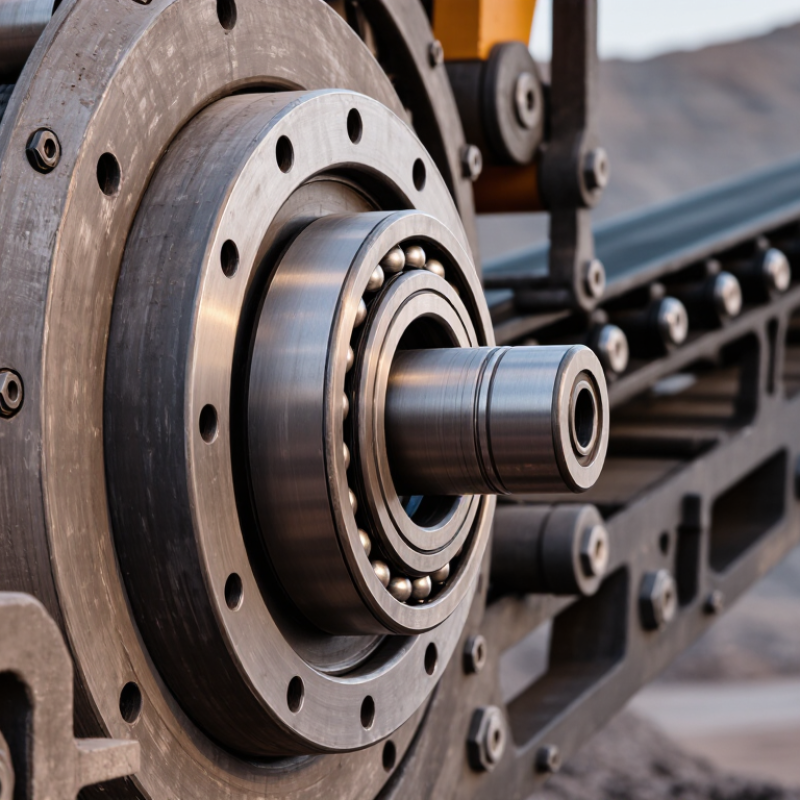
Mining bearings face crushing loads, abrasive dust, water, vibration, and sudden temperature changes. Heavy-duty design begins with steel cleanliness, controlled heat treatment, and accurate raceway geometry. These details help prevent early fatigue cracks under repeated shock loads.
ISO 281 evaluates bearing life through load ratings and operating conditions. However, laboratory life is not field life. A bearing exposed to wet ore may fail long before its calculated rating. Effective seals, suitable internal clearance, and high-quality grease are therefore essential. In large conveyors, crushers, and screens, even a small clearance error can create heat, noise, and accelerated wear.
Maintenance data supports this practical approach. The U.S. Department of Energy’s Operations & Maintenance Best Practices report states that predictive maintenance can reduce maintenance costs by about 8% to 12% compared with preventive programs. Vibration analysis, temperature checks, and grease sampling can reveal problems before a shaft stops production. The method is useful, but not flawless. Sensors can miss damage when installation is poor or inspection intervals are too long.
Buyers should review static load capacity, dynamic load rating, sealing performance, lubrication requirements, and operating temperature. Ask for traceable material certificates and test records. Also check whether the bearing suits misalignment and impact loads. A low purchase price can become expensive beside a silent conveyor and an urgent shutdown.
How to Evaluate Bearing Types for Mining Equipment Applications
Choosing heavy-duty bearings for mining equipment starts with the actual load, not the catalog headline.
Spherical roller bearings can accommodate radial loads and some misalignment, while tapered roller bearings suit combined radial and axial forces. Cylindrical roller designs carry high radial loads, but need suitable alignment and lubrication. Deep-groove ball bearings may fit lighter, faster-running auxiliary equipment; they are not a default choice for a shock-loaded crusher.
Check shaft speed, impact frequency, operating temperature, housing stiffness, and available space. Dust matters. So does water.
Look beyond basic load ratings.
ISO 281 provides methods for calculating bearing life, but real service life also depends on lubrication, contamination, installation, and maintenance.
A rating is not a promise.
Ask how seals handle abrasive fines, whether grease can reach the rolling contacts, and how technicians will inspect or replace the unit.
USGS Mineral Commodity Summaries 2024 estimated U.S. nonfuel mineral production at about $105 billion in 2023, illustrating the scale of assets that depend on reliable equipment. That figure does not predict bearing life. It does make downtime worth measuring.
Compare candidate bearings against site records: temperature trends, vibration, lubricant condition, and failure intervals.
Catalog comparisons alone are tidy. Mines rarely are.
Seven Essential Bearing Options for Heavy-Duty Mining Machinery
7 Best Mining Machinery Heavy Duty Bearings for Buyers
Seven Essential Bearing Options for Heavy-Duty Mining Machinery
Mining machinery faces dust, shock loads, vibration, and sudden temperature changes. Bearing selection must match the machine, not only the shaft size.
Spherical roller bearings handle heavy radial loads and moderate misalignment. They suit crushers, conveyors, and vibrating screens. Cylindrical roller bearings provide high radial capacity where shaft deflection remains limited. They work well in high-speed conveyor pulleys and gear systems. Tapered roller bearings manage combined radial and axial loads. Their adjustable clearance supports demanding wheel, gearbox, and crusher applications.
Thrust spherical roller bearings carry strong axial loads while tolerating limited misalignment. Four-row cylindrical roller bearings fit compact, high-load arrangements, especially in rolling and crushing equipment. Split spherical roller bearings can simplify replacement when shafts or housings cannot be removed easily. Slewing ring bearings support large rotating structures, including excavator platforms and positioning assemblies. They require careful bolt control and raceway inspection.
Clean installation matters as much as bearing type. Technicians should check shaft fits, housing distortion, lubrication volume, and seal condition. A small alignment error can create abnormal heat within hours. Grease contaminated with rock dust becomes abrasive. It is easy to blame the bearing too quickly. A perfect selection on paper can still fail after poor mounting or irregular lubrication. Temperature records and vibration readings reveal problems before visible damage appears. Clearance choices also need review when operating temperatures change significantly.
Installation, Maintenance, and Replacement Guidelines for Mining Bearings
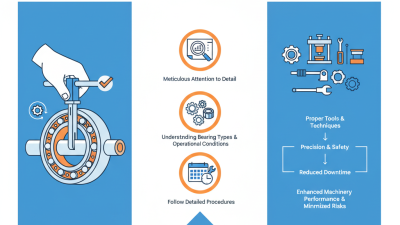
Mining bearings endure heavy loads, abrasive dust, vibration, and sudden temperature changes. Installation must begin with clean hands, clean tools, and a protected work area. Inspect the shaft, housing, and bearing surfaces for scoring, burrs, or corrosion. Measure fits with calibrated instruments, not visual judgment. Use controlled heating when required, and apply force only to the correct bearing ring. Never hammer the rolling elements. Confirm the bearing direction, seals, and internal clearance before assembly. After fitting, rotate the shaft by hand and check for resistance or unusual noise.
Maintenance records should include operating temperature, vibration readings, lubricant type, and service dates. Relubricate according to load, speed, contamination, and the approved maintenance schedule. Too much grease can raise temperature and damage seals. Too little grease invites rapid wear. Inspect seals for cracks and watch for metallic particles near the housing. A simple temperature check can reveal trouble early. Still, field readings are not always perfect. Sensor placement and dust can mislead technicians.
Replace a bearing after isolating and locking out the machine. Use suitable extraction tools instead of forcing the shaft or housing. Clean the mounting surfaces, then inspect them for looseness or distortion. Compare the replacement bearing with the engineering specification, including clearance and load capacity. Install it without transferring force through the rolling elements. Run the equipment at low speed first, then monitor heat, vibration, and noise. If temperature rises quickly, stop and investigate. The bearing may not be the only problem. Misalignment, damaged seals, or an overloaded conveyor can produce similar symptoms.