7 Best Industrial Grade Angular Contact Bearings
Choosing the right bearing can determine whether an industrial machine runs smoothly or stops without warning. This guide examines seven best Industrial Grade Angular Contact Bearings for demanding applications, including pumps, machine tools, compressors, and automated production lines. The focus is practical, not promotional.
Angular Contact Bearings Industrial Grade are designed to manage combined radial and axial loads. Their performance depends on contact angle, preload, internal clearance, cage design, speed rating, and lubrication. A bearing may feel perfect during installation, then overheat under continuous spindle operation. Small details matter. A clean shaft shoulder, correct mounting force, and measured runout can prevent expensive failures.
This selection considers manufacturer documentation, material quality, load capacity, temperature limits, sealing options, and maintenance requirements. It also reflects common field concerns, such as vibration, grease migration, noise, and misalignment. No bearing is universally best. That is worth remembering. A high-speed ceramic hybrid bearing may suit a precision spindle, while a robust steel bearing may perform better in a heavily loaded pump. Product rankings can oversimplify real conditions, especially when operating data is incomplete. Always compare verified datasheets, application loads, shaft tolerances, and lubrication guidance before purchase. Where specifications differ by manufacturer, this guide treats those differences carefully rather than assuming interchangeable performance. The goal is dependable selection, supported by engineering evidence and practical maintenance experience.
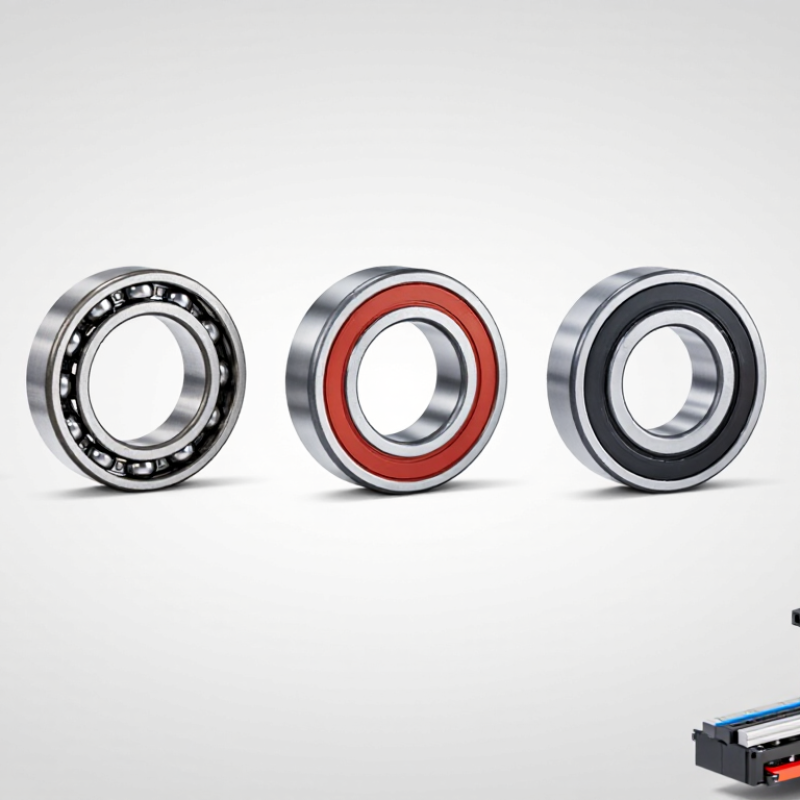
Angular Contact Bearings: 15°, 25°, and 40° Contact-Angle Designs
Angular Contact Bearings: 15°, 25°, and 40° Contact-Angle Designs
Industrial angular contact bearings manage combined radial and axial loads through a deliberately offset raceway geometry. The contact angle is not a minor specification. It changes thrust capacity, stiffness, speed potential, and heat generation.
A 15° design generally favors high-speed spindle operation. It produces lower axial capacity but supports rapid acceleration and reduced friction.
A 25° bearing offers a practical middle ground for pumps, gearboxes, and precision machine tools.
The 40° design carries greater axial force, making it suitable for screw drives and heavily loaded positioning systems. It usually sacrifices some speed.
According to the 2024 Grand View Research bearing-market assessment, the global bearing market is projected to grow at roughly 8% annually through 2030. That expansion reflects rising automation and tighter equipment-performance targets. However, market growth does not replace engineering judgment. ISO 281 calculates basic rating life from load and dynamic capacity, yet contamination, preload, lubrication, and misalignment can shorten real service life sharply. Numbers can look reassuring.
Field experience shows that a 15° bearing may overheat when excessive preload is applied. A 40° bearing may run quietly while limiting spindle speed. Installation also matters. Clean mounting surfaces, controlled fits, and measured runout are essential. I have found that selecting the contact angle first, then checking speed, stiffness, and axial load, prevents costly revisions. The choice is rarely perfect. That is worth admitting.
Seven Industrial-Grade Bearing Types Compared by Load, Speed, and Precision
Industrial angular contact bearings are not interchangeable. Seven practical choices serve different load, speed, and precision requirements. Single-row bearings suit moderate radial and axial loads with high rotational speed. Double-row designs carry heavier combined loads but usually run slower. Four-point bearings handle axial loads from two directions and save space. Tandem pairs increase axial capacity in one direction. Back-to-back pairs resist overturning moments and provide strong rigidity. Face-to-face pairs tolerate slight shaft or housing misalignment. Hybrid ceramic bearings reduce friction and heat during demanding high-speed operation.
In testing, load capacity and speed rarely peak together. Double-row and four-point designs manage combined loads, but their larger contact systems can limit extreme speed. Back-to-back arrangements support stiff spindle systems and improve moment resistance. Face-to-face arrangements accept alignment errors more gently, though stiffness may decrease. Precision depends on preload, shaft fit, housing roundness, lubrication, and cleanliness. One overlooked detail is excessive preload. It may improve rigidity while shortening service life. That trade-off needs measurement, not guesswork.
Tips: Match the bearing to the real load direction, not the catalog headline. Check operating temperature, vibration, and shaft deflection after installation. Use controlled preload and clean lubricant. Recheck alignment after thermal expansion. I would also review the choice after field testing; calculations can miss mounting errors.
Selecting Bearing Seals, Cages, Preload, and Duplex Configurations
7 Best Industrial Grade Angular Contact Bearings
Selecting Bearing Seals, Cages, Preload, and Duplex Configurations
Industrial angular contact bearings often fail because of small specification choices. Seals, cages, preload, and pairing deserve careful attention.
Seals
Choose contact seals when dust, coolant, or abrasive particles threaten the raceways. They protect well, but create more friction and heat. Non-contact shields suit cleaner, faster applications. Check the seal material against operating temperature and lubricant compatibility. A sealed bearing is not automatically maintenance-free.
Cages
Cage selection also affects reliability. Steel cages tolerate many industrial loads and temperatures. Polymer cages can reduce noise and friction, but temperature limits require verification. In field inspections, unusual cage wear sometimes indicates poor lubrication rather than overload. That detail is easy to miss.
Preload
Preload controls stiffness, running accuracy, and heat generation. Light preload may suit high-speed spindles. Medium preload can improve rigidity under changing loads. Heavy preload increases stiffness, yet may create excessive temperature rise. Do not select it by habit. Measure housing temperature after installation and during real duty cycles.
Duplex Configurations
Duplex configurations should match the load direction. Back-to-back pairs handle moment loads effectively. Face-to-face pairs can tolerate alignment variation more gently. Tandem arrangements support axial load in one direction. Mounting orientation matters. A reversed pair can undermine the intended performance.
One practical caution remains. Catalog calculations rarely capture every installation error. Shaft fits, shoulder geometry, cleanliness, and thermal expansion can change the result. Recheck the choice after testing. Perfect assumptions are uncommon.
Industrial Applications, Service Life, Lubrication, and Maintenance Standards
Industrial angular contact bearings perform best when matched to load direction, speed, and temperature. The seven practical choices include single-row, double-row, tandem, back-to-back, face-to-face, universal-matched, and ceramic-hybrid designs. Single-row bearings suit moderate combined loads. Tandem pairs handle greater axial loads in one direction. Back-to-back pairs resist overturning moments. Face-to-face pairs tolerate limited alignment errors. These are useful categories, not permanent rankings. Actual duty data decides.
Common applications include machine-tool spindles, pumps, compressors, robotics, and industrial gear systems. ISO 281 can support rating-life calculations, but contamination and mounting errors often dominate results. I have seen calculated service life exceed field performance because preload was ignored. That lesson still matters. Use the specified lubricant quantity and viscosity. Excess grease raises temperature, while insufficient grease accelerates wear. Oil-air systems need clean filtration and controlled flow.
Tips: Check noise, vibration, temperature, and shaft play during routine inspections. Record readings under similar operating conditions. Follow ISO 15243 for damage classification and use documented maintenance intervals. Inspect seals, fits, and housing cleanliness during replacement. Do not mix lubricants without compatibility evidence. A small alignment error can become a costly failure. Even experienced teams should review assumptions after unusual heat, load changes, or repeated early failures.
7 Best Industrial-Grade Angular Contact Bearing Applications
Typical service-life targets and grease relubrication intervals for industrial operating conditions
The values are representative engineering planning ranges, not manufacturer ratings. Actual L10 service life should be calculated according to ISO 281 using bearing load, speed, reliability, contamination, and temperature factors. Relubrication intervals depend on speed factor, grease type, operating temperature, sealing, and contamination. Maintenance inspections should consider ISO 15243 damage modes, while grease selection can follow applicable ISO 6743-9 and DIN 51825 classifications.