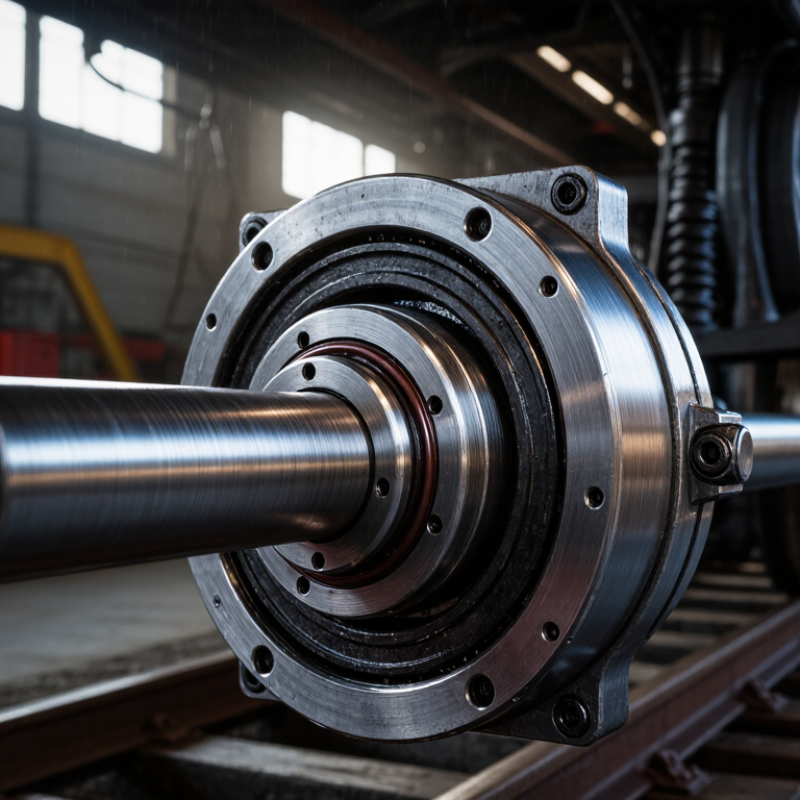
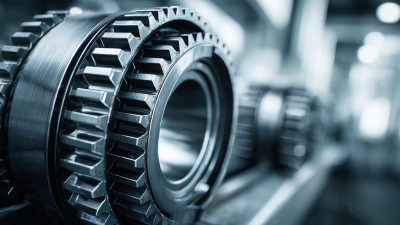
Choosing a customized railway locomotive bearing starts with understanding the job it must perform. An axlebox bearing faces heavy radial loads, shock, vibration, changing speeds, and exposure to water and dust. A traction-motor bearing may require a different arrangement, clearance, and lubrication strategy. Details matter.
Railway Locomotive Bearings Customized to a specific locomotive should be selected using real operating data, not a single headline load rating. Useful inputs include axle load, maximum and typical speed, shaft dimensions, available installation space, temperature range, duty cycle, and maintenance intervals. Engineers should also review seal design, lubricant compatibility, internal clearance, cage material, and mounting tolerances. Small differences can affect heat, wear, noise, and service life. Not just size.
The choice involves trade-offs. A tighter seal can help limit contamination, but may increase friction under some operating conditions. A lubricant suited to one temperature range may not perform as well in another. No bearing specification can compensate for poor alignment or unclear maintenance procedures. Real service records, inspection findings, and supplier test documentation help validate a design before wider use. Still, field data is sometimes incomplete; that uncertainty should be recorded, not hidden. This guide explains how to compare requirements, ask suppliers precise questions, and assess whether a proposed customized bearing fits the locomotive’s actual operating environment. The final specification should be reviewed by qualified engineers and checked against the equipment manufacturer’s requirements.
Before choosing a customized railway locomotive bearing, define how the locomotive actually operates. Record axle load, maximum speed, and hours spent moving, idling, or braking. A freight locomotive hauling heavy loads on steep grades faces a different duty cycle from a yard locomotive making frequent starts and stops.
Short trips matter.
Describe the forces at the bearing position, including radial loads, axial thrust, vibration, and impacts over rail joints. Note the expected temperature range, dust and moisture exposure, available lubrication, and inspection intervals. Measure the installation space and check shaft dimensions, fits, and alignment; even a small mismatch can complicate installation. Where possible, use service records and temperature or vibration readings rather than relying on estimates alone.
Early assumptions are often wrong. That is worth admitting.
A tidy specification may still overlook brief overloads during traction changes or a maintenance delay. Share those uncertainties with the bearing engineer, then confirm the operating limits and validation plan before finalizing the design.
For customized locomotive bearings, map every position before choosing dimensions. Axlebox bearings face radial load, shock, vibration, and contamination from ballast dust. Traction-motor and gearbox bearings see different speed, temperature, and thrust conditions. Record shaft diameter, housing fit, operating speed, lubrication method, and measured temperatures. A bearing that fits on paper may still run hot when preload or alignment is wrong. Small details matter.
Failure risk should guide the specification. ISO 281 sets basic rating life, L10, at 90% reliability under its defined conditions; it is not a promise that every bearing lasts equally long. The FRA’s Railroad Safety Data separates equipment-related events from track and human-factor causes, a useful reminder to check the whole failure chain. Review maintenance logs for repeat hot-bearing alarms, grease discoloration, water ingress, and metal particles. ISO 15243’s damage categories can help distinguish fatigue, wear, corrosion, and electrical erosion during teardown. Keep the evidence. Custom designs should reflect actual duty cycles, not catalogue assumptions; field data are imperfect, and one unusual route can distort averages. A practical specification names the load case, sealing level, lubricant, inspection interval, and failure limits.
Choose the bearing type around measured axle loads, speed, shock, and available housing space. Tapered roller bearings can carry combined radial and axial loads, while cylindrical roller designs suit high radial loads. Fit is not enough. Confirm clearances and internal preload against the locomotive’s operating temperature range; a small mismatch can raise heat and shorten service life.
Material selection should reflect contact stress, impact, and contamination risk. Through-hardened bearing steel is common for rolling contact, while case-hardened steel can offer a tougher core under shock. ISO 281:2007 defines basic rating life, L10, at 90% reliability under stated conditions. That is a calculated reference, not a field-life promise. Real track conditions can be less tidy.
Match lubrication to the axlebox design and maintenance plan. Grease can suit sealed units; circulating oil requires a system designed to manage flow and sealing. Check lubricant performance at cold starts and operating temperatures, and inspect for water, dust, and metal particles. Heat leaves clues. A grease choice that works in a clean workshop may disappoint after a wet, abrasive route, so validate it with representative duty-cycle testing.
For customized railway locomotive bearings, define the operating conditions before choosing features. Record radial and axial loads, peak shock loads, shaft speed, and expected temperature range. Include the actual shaft and housing dimensions, not just nominal sizes. A few microns can affect fit, clearance, heat, and vibration.
Specify the bearing’s internal clearance, cage material, lubrication method, and seal design. For example, a locomotive exposed to brake dust and water may need stronger contamination protection than one operating in cleaner conditions. State the lubricant’s temperature range and relubrication interval. Small details matter. A drawing can still miss how maintenance crews access the bearing, so check installation and inspection procedures with them.
Set measurable performance standards before approving a custom design. Define required service life, allowable temperature rise, vibration limits, load capacity, and dimensional tolerances. Ask for material and heat-treatment records, inspection results, and a validation plan that reflects the locomotive’s duty cycle. Laboratory tests help, but they may not capture every track condition. If operating data is incomplete, mark assumptions clearly and review them after field monitoring. That step is easy to postpone. It should not be.
| Bearing Position | Typical Bearing Arrangement | Key Operating Conditions | Custom Features to Specify | Performance and Verification Criteria | Relevant Standards or Methods |
|---|---|---|---|---|---|
| Axlebox | Tapered roller or cylindrical roller arrangement, selected to suit the axlebox design and load path | High radial load, variable axial load, shock and vibration, outdoor contamination, and a broad operating-temperature range | Internal geometry and clearance matched to the housing; seal design for water and dust exposure; grease type and fill quantity; corrosion protection where required | Verify static and dynamic load capacity, calculated rating life, temperature rise, sealing, and resistance to vibration under the specified duty cycle | EN 12080 for railway axlebox rolling bearings; EN 12081 for axlebox lubricating greases; ISO 281 for rating life; ISO 76 for static load ratings |
| Traction motor — drive end | Cylindrical roller bearing or other arrangement defined by the motor design | High rotational speed, radial load, motor vibration, heat, and possible electrical-current passage through the bearing | Specify internal clearance, cage design, lubrication method, fits, insulation requirements, and shaft-current mitigation where applicable | Check speed capability against the motor duty cycle; assess temperature, vibration, lubricant life, and electrical damage risk in the assembled motor | ISO 281 for rating life; ISO 15243 for rolling-bearing damage classification; use the motor maker’s test plan and applicable railway project requirements |
| Traction motor — non-drive end | Deep-groove ball or cylindrical roller bearing, depending on the motor’s locating and floating arrangement | High speed, thermal growth of the shaft, radial load, and alignment variation within the motor assembly | Define locating or non-locating function; specify clearance, cage, lubricant, and any insulated or coated bearing surfaces | Confirm axial freedom where required, operating clearance at temperature, vibration limits, and stable lubricant supply | ISO 492 for dimensional and running accuracy tolerances; ISO 281 for rating life; verify final requirements against the motor design specification |
| Gearbox input or output shaft | Tapered roller or cylindrical roller bearing arrangement selected for combined load and shaft layout | Gear-mesh forces, radial and axial loads, torque fluctuations, lubricant exposure, and possible impact loading | Specify contact geometry, preload or endplay, clearance, surface finish, material and heat-treatment requirements, and compatibility with gearbox oil | Assess combined-load rating life, static safety, operating temperature, noise, and performance using the actual gear-load spectrum | ISO 281 for rating life; ISO 76 for static load ratings; ISO 15243 for failure analysis; gearbox-specific validation plan |
| Cooling fan or auxiliary equipment | Deep-groove ball bearing or other compact bearing suited to the shaft and housing | Continuous or intermittent operation, moderate loads, elevated ambient temperature, and exposure to dust or moisture | Specify seals or shields, grease selection, relubrication interval if applicable, clearance, and mounting arrangement | Confirm speed and load suitability, temperature stability, noise and vibration requirements, and maintenance interval | ISO 281 for rating life; ISO 492 for dimensional accuracy; validate environmental and endurance requirements in the equipment specification |
| All locomotive bearing positions | Application-specific; avoid selecting by bearing type alone | Duty cycle, load spectrum, speed, shock, temperature, contamination, maintenance access, and expected service life | Record boundary dimensions, fits, internal clearance, cage, material, heat treatment, seals, lubricant, traceability, and inspection requirements | Agree acceptance criteria for dimensions, runout, hardness where specified, cleanliness, noise or vibration, and sample testing before production release | ISO 492 for bearing tolerances; ISO 15243 for damage terminology; use the applicable railway standards and approved project drawings |
Specification note: Bearing arrangements, loads, clearances, speeds, fits, lubrication, and service-life targets must be confirmed from the locomotive design and duty-cycle data. Standards and editions applicable to a project should be agreed by the purchaser and supplier; example criteria in this table are not universal acceptance limits.
Choosing a customized locomotive bearing starts with operating data, not a catalogue sketch. Share axle loads, speed ranges, shock exposure, temperature, lubrication method, and available installation space. A capable supplier should ask how the bearing will be inspected and replaced, too. Specific questions matter.
Ask for material certificates, dimensional inspection records, and documented test results tied to the proposed design. Review how the supplier controls heat treatment, machining tolerances, and batch traceability. Testing should reflect service conditions where practical, including load, temperature, vibration, and lubricant behavior. A polished report alone proves little. Check test methods, acceptance limits, and whether failures trigger documented corrective action. If results rely on assumptions, ask which ones remain unverified.
Maintenance support deserves equal attention. Confirm recommended inspection intervals, lubrication guidance, storage conditions, and replacement procedures. Ask how quickly technical staff can respond when vibration or temperature readings change, and whether spare bearings can be supplied consistently. Request clear drawings and fit-up instructions for the maintenance team. Small gaps here can cause avoidable delays. I would also check whether the supplier reviews field feedback after delivery; that step is easy to promise and harder to sustain. Good support should leave technicians with usable records, not just a sales contact.
Suggested supplier evaluation weighting across engineering, testing, quality, and lifecycle support.
Treat these percentages as a practical planning model, not an industry-wide benchmark. Adjust them to the locomotive duty cycle and procurement requirements. Confirm the bearing design, inspection, and validation plan against applicable requirements, including EN 12080 for railway axlebox bearings where relevant. Agree on traceability, maintenance guidance, and failure-analysis support before placing an order.