How to Choose Middle East High-Temperature Bearings for Your Needs?
When selecting Middle East high-temperature bearings, understanding specific industry demands is vital. The region has seen rising temperatures, increasing the need for reliable bearing solutions. According to a recent report by the International Bearing Association, high-temperature applications can stress bearings significantly. This can lead to premature failure, affecting performance and productivity.
Key industries in the Middle East, such as oil and gas, heavily rely on dependable high-temperature bearings. The potential for equipment breakdown due to inadequate bearing selection is substantial. For instance, a single failure in an oil refinery could result in millions in lost revenue. Manufacturers must focus on bearing materials, lubrication methods, and design features tailored for extreme conditions.
Choosing the right Middle East high-temperature bearings requires cooperation with experts. They can provide insights into the latest advancements in materials and technologies. Companies should also consider potential long-term effects of their choices. Understanding these factors can lead to better decision-making and enhanced operational efficiency, ultimately reducing downtime and maintenance costs.
Understanding High-Temperature Bearings and Their Applications
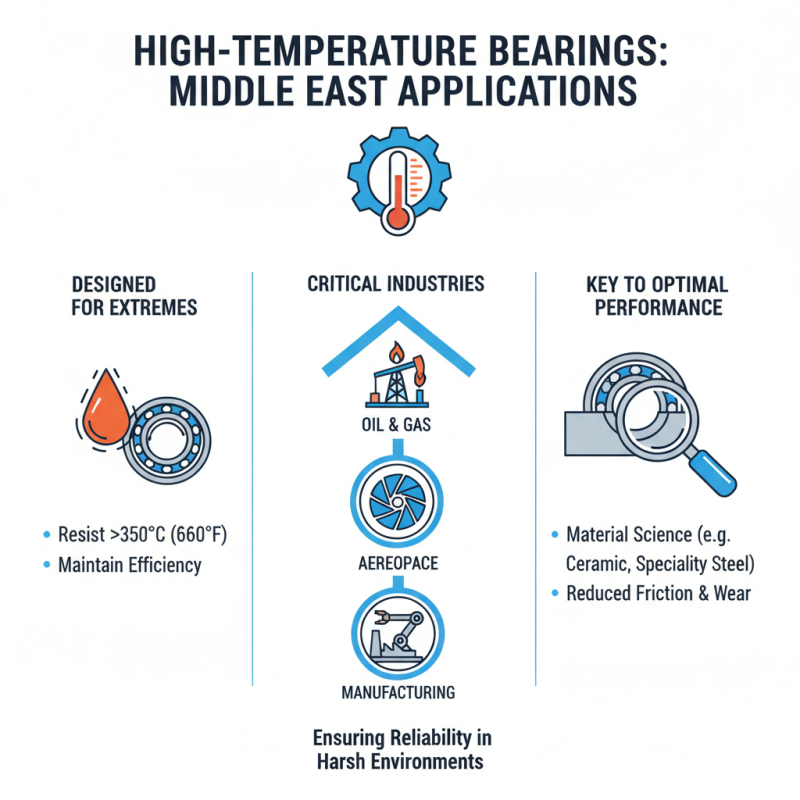
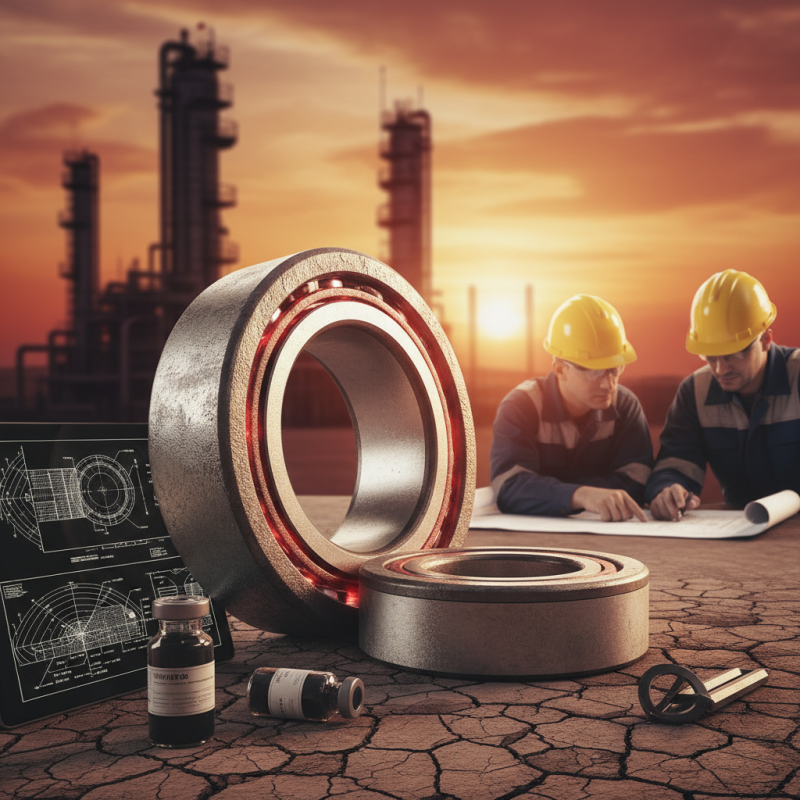
High-temperature bearings play a vital role in various industries across the Middle East. They are designed to withstand extreme temperatures while ensuring operational efficiency. These bearings are commonly used in sectors like oil and gas, aerospace, and manufacturing. Understanding their properties is essential for optimal performance.
When selecting high-temperature bearings, consider the operational environment. Some bearings can function in temperatures exceeding 300°C. This requires specialized materials like ceramic and certain polymers. Environmental resistance is also crucial, as exposure to moisture or corrosive substances can weaken the bearing. Maintaining a balance between load capacity and temperature range is important.
Many users overlook the need for proper lubrication at high temperatures. Conventional lubricants may fail, leading to premature wear. It's essential to choose the right type of grease or oil that maintains consistency under heat. Testing options in real conditions can be beneficial. Developing a deeper understanding of specific applications can lead to more informed decisions.
Factors Influencing the Selection of High-Temperature Bearings
Choosing high-temperature bearings for Middle Eastern conditions involves various critical factors. The operating temperature range is a primary consideration. Different applications may require bearings to function at vastly different temperatures. It is crucial to understand the specific thermal limits of the bearings you select to ensure optimal performance. Additionally, the material composition greatly influences the bearings' resilience to heat.
Another significant factor is the load capacity. Bearings in high-temperature environments can experience different stress levels than those in standard conditions. It's essential to assess the expected load and select a bearing that can reliably support it. Lubrication also plays a vital role. High temperatures can cause lubrication to degrade more quickly, which can lead to failure. Using the right high-temperature lubricant is necessary for maximizing the lifespan of the bearings.
Finally, consider the potential for dirt and contaminants. The Middle East is often dusty, which can harm any mechanical component. Sealed or shielded bearings may provide better protection, but they can also introduce challenges like increased friction. Balancing protection with performance needs careful thought. Each unique application will present its own set of challenges, requiring ongoing assessment and adjustment.
How to Choose Middle East High-Temperature Bearings for Your Needs?
| Factor |
Description |
Example Materials |
Typical Applications |
| Operating Temperature Range |
The temperature range that the bearing can withstand during operation without losing its properties. |
Silicon Nitride, Ceramic Materials |
Aerospace, High-Performance Engines |
| Load Capacity |
The maximum load that the bearing can support under specific conditions. |
Steel, Titanium Alloys |
Industrial Machinery, Robotics |
| Corrosion Resistance |
The ability of the bearing material to withstand corrosive environments. |
Stainless Steel, Polyimide |
Chemical Processing, Marine Applications |
| Speed Ratings |
The maximum rotational speed at which the bearing can operate efficiently. |
Hybrid Bearings, Ceramic Balls |
High-Speed Applications, Turbines |
| Lubrication Type |
Type of lubrication required for the bearing depending on the temperature and application. |
Oil, Solid Lubricants |
Extreme Condition Environments, Aerospace |
Key Material Properties for Middle East Bearing Environments
When selecting high-temperature bearings for the Middle East, understanding the material properties is crucial. These bearings must withstand extreme heat and abrasive environments. Look for materials that can maintain their integrity at elevated temperatures, such as ceramics or specialized metal alloys. High wear resistance is essential to prolong bearing life in harsh conditions.
Another vital property is corrosion resistance. The Middle East has arid climates, but humidity and salt can induce rust. Choosing bearings with coatings or treatments that resist corrosion is important. For example, certain polymers or protective layers can significantly extend service life.
While some materials may seem promising, they can have drawbacks. For instance, ceramics typically have high stiffness but can be brittle. This makes them unsuitable for all applications. Evaluating performance under real conditions helps in making better choices. Testing different materials in the field can provide insights that specifications alone cannot.
Evaluating Load Capacity and Performance Requirements
Selecting high-temperature bearings for Middle Eastern applications hinges on understanding load capacity and performance requirements. High temperatures can significantly impact the bearing's performance and lifespan. Research indicates that bearings operating above 120°C can start to degrade, leading to reduced efficiency and increased failure rates.
Evaluating load capacity is essential. Load ratings provide insights into bearings' performance under various conditions. A study from the International Bearing Association highlights that a bearing’s static load rating needs to be at least 30% higher than the expected load for optimal performance. It's crucial to account for dynamic loads as well, especially in environments with vibration and shock. Manufacturers often recommend considering both radial and axial loads for accurate assessments.
Lastly, performance under varying temperatures must be evaluated. Many high-temperature bearings use specialized materials to enhance thermal resistance. Specific data suggests that using ceramic-based materials can extend a bearing's service life by 50% in extreme heat. However, not all materials behave similarly under pressure. Some options may offer reliability but fall short in load capacity, which requires careful consideration. Therefore, understanding the balance between load demands and thermal resistance is key to an informed selection process.
Choosing Between Standard and Custom High-Temperature Bearings
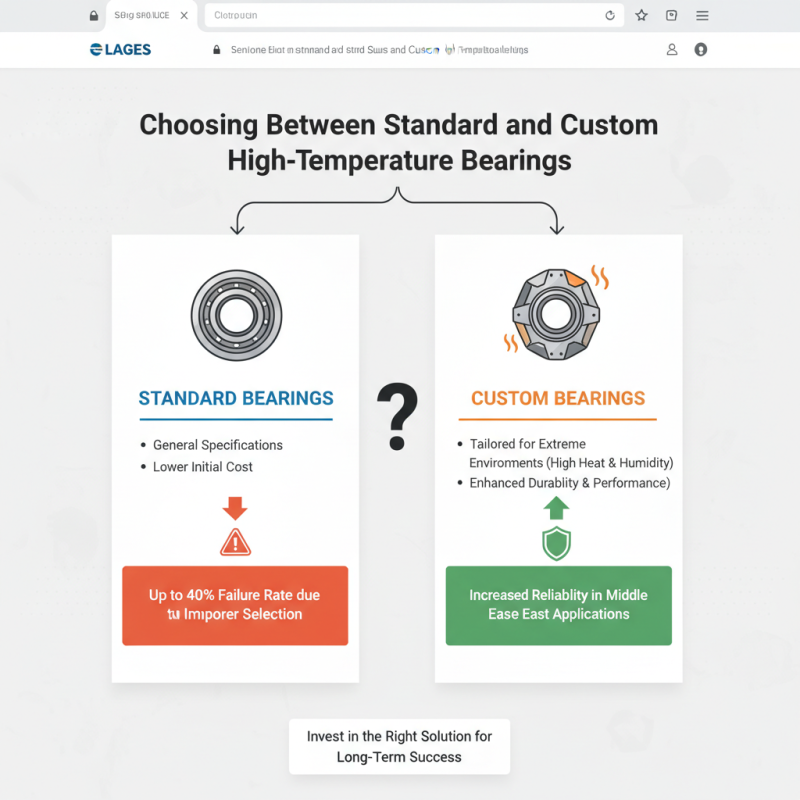
When selecting high-temperature bearings for applications in the Middle East, one must evaluate the difference between standard and custom options. Standard bearings often meet general specifications but may lack specific qualities needed for extreme environments. Many industries report that up to 40% of bearing failures stem from improper selection based on environmental conditions. This statistic emphasizes the need for tailored solutions, especially under high heat and humidity.
Custom high-temperature bearings can be designed to withstand unique operational stresses. They enable better performance in conditions that standard products may not endure. According to recent industry data, custom bearings can reduce failure rates by as much as 30%. These solutions allow for optimal material selection and geometry, which can significantly extend lifespan and reliability.
It is essential to analyze your specific operating environment. Factors like temperature variations, load types, and potentially corrosive atmospheres will heavily influence the choice. Custom bearings might provide a better fit, addressing nuances that standard options overlook. However, this requires careful planning and extensive consultation with experts. Not all applications will demand customization, but understanding the need is critical for reducing downtime and enhancing operational efficiency.