10 Essential Tips for Custom Thrust Ball Bearings Manufacturing?
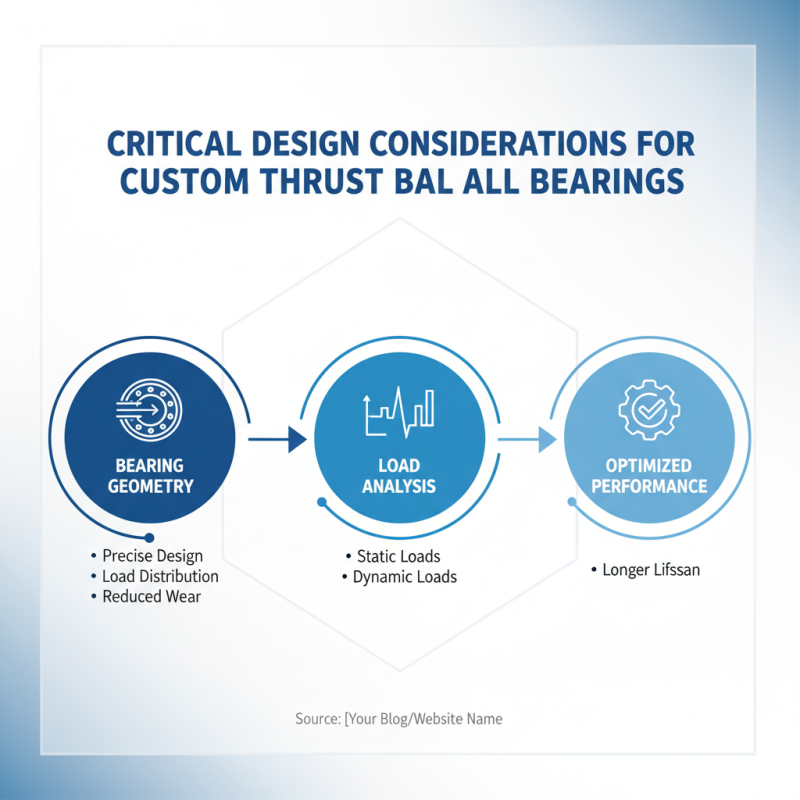
In the world of industrial components, Thrust Ball Bearings Custom Manufacturing plays a critical role. These bearings enable smooth rotational movements under axial loads. However, manufacturing them requires precision and expertise. A small design flaw can lead to operational inefficiencies.
Understanding the nuances of thrust ball bearing production is crucial for engineers and manufacturers. Materials selection, machining processes, and quality control measures are foundational aspects. Each component must be meticulously crafted. This ensures they operate effectively in a variety of applications, from automotive to aerospace industries.
Adopting best practices in production is essential. Relying solely on traditional manufacturing processes might limit innovation. Continuous improvement is necessary to meet growing market demands. The journey of creating thrust ball bearings is complex, requiring constant reflection and refinement. This guide presents ten essential tips that can enhance the manufacturing process, paving the way for superior thrust ball bearings.
Understanding the Basics of Thrust Ball Bearings and Their Applications
Thrust ball bearings are vital components in many machines, ensuring smooth rotational motion. They support axial loads, making them essential for applications like automotive, aerospace, and industrial equipment. According to industry reports, the global thrust ball bearing market is projected to grow by 5% annually. This growth highlights their importance in modern engineering.
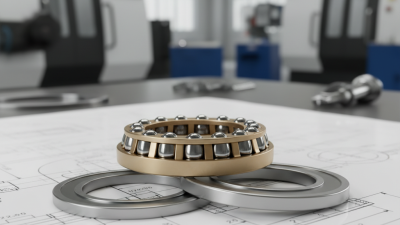
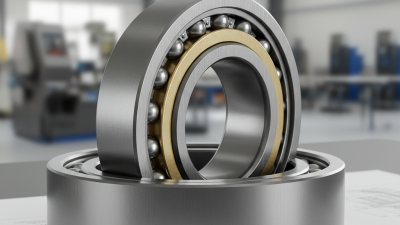
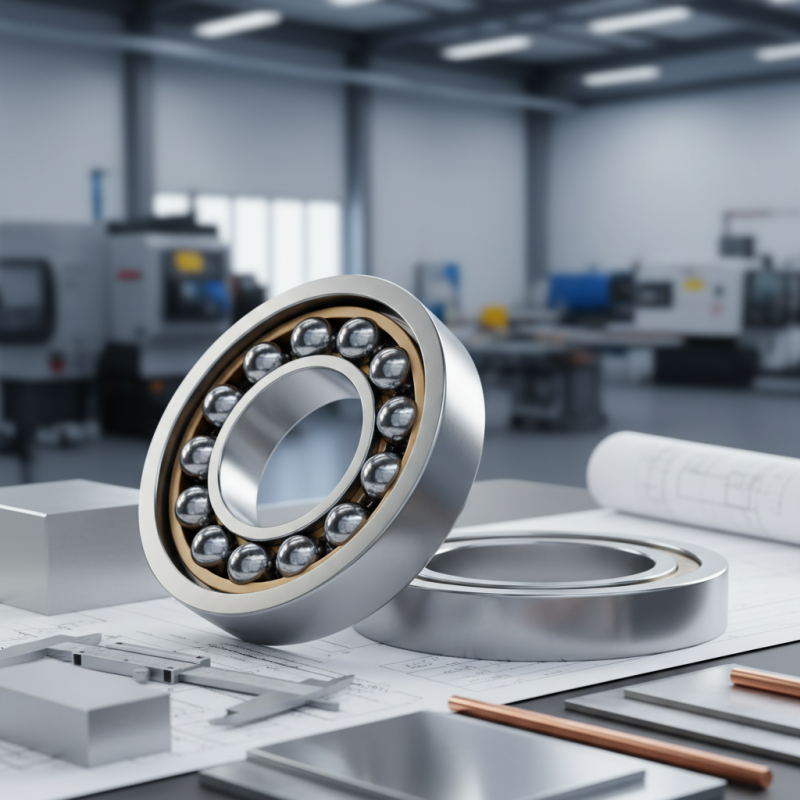
Understanding how these bearings operate is crucial. They comprise an outer ring, inner ring, and balls, which facilitate minimal friction. The proper alignment of these parts can enhance durability and performance. Observations show that misalignment or inadequate lubrication can lead to premature failure. Many manufacturers face challenges in maintaining these parameters, often needing more precise handling during assembly. Such details are integral to the manufacturing process.
The applications of thrust ball bearings vary widely. In automotive engines, they help maintain stability under heavy loads. Similarly, in aerospace, they endure extreme conditions while ensuring safety. However, the industry must address common manufacturing pitfalls. Flaws in material selection or surface finishes can significantly impact performance. As technology advances, continual reevaluation of manufacturing techniques becomes essential.
Key Materials Used in Manufacturing Custom Thrust Ball Bearings
When it comes to manufacturing custom thrust ball bearings, selecting the right materials is crucial. The primary materials often include steel and ceramics. Steel is favored for its strength and durability. It's essential for high-load applications. Ceramics, while more expensive, offer great resistance to wear and corrosion. This makes them a strong choice for harsh environments.
Tip one: Choose a material based on the specific conditions in which the bearing will operate. For example, if it's for high-speed applications, ceramic could be the best option. Consider thermal stability and resistance to wear.
Tip two: Evaluate the surface finish of materials. A rough surface can lead to premature failure. Ensure that the finish meets the application's tolerances. A polished surface often enhances performance.
However, not every material suits every application. Designers must reflect on the trade-offs between cost and performance. Steel may be sufficient for standard applications, while a demanding environment may necessitate ceramics. Each choice should align with long-term performance expectations.
Manufacturing Processes for Producing High-Quality Thrust Ball Bearings
The manufacturing of thrust ball bearings involves intricate processes that determine their quality and performance. Precision in material selection is critical. Steel grade, hardness, and surface finish all impact the bearing's durability. According to the International Organization for Standardization (ISO), nearly 40% of bearing failures are due to material defects.
Tip: Regularly review material suppliers for their compliance with quality standards. This can enhance bearing life and reduce failure rates.
Machining techniques also play a vital role. Computer Numerical Control (CNC) machines ensure exact dimensions, which are crucial for the fit between balls and races. Improper tolerances can lead to excessive wear. A study by the Society of Tribologists and Lubrication Engineers reveals that bearings with tight tolerances exhibit up to 30% longer operational life.
Tip: Invest in advanced machining technology. This can improve precision and ultimately cut costs.
Heat treatment processes are essential for achieving the required hardness. Different methods, such as quenching and tempering, can alter the microstructure. This, in turn, affects load capacity. Some manufacturers still use outdated methods, risking the performance and reliability of their products. Understanding these nuances can lead to significant improvements in thrust ball bearing manufacturing.
Quality Control and Testing Methods for Thrust Ball Bearings Production
Quality control is crucial in thrust ball bearing production. It starts with selecting the right materials. Manufacturers often use high-grade steel for durability. Proper heat treatment is vital as well. It enhances strength and reduces wear.
Testing methods must be robust. Visual inspections should be routine. Checking for surface imperfections can prevent future failures. Vibration analysis helps identify potential issues early. Every batch should undergo dimensional checks. Even minor deviations from specifications can lead to failures in applications.
Documentation plays a significant role. Recording results builds a historical database. This assists in continuous improvement. However, reflections on past failures are needed. Not every production run will be perfect. Learning from mistakes can lead to better practices. Quality control is an ongoing journey, not a destination.