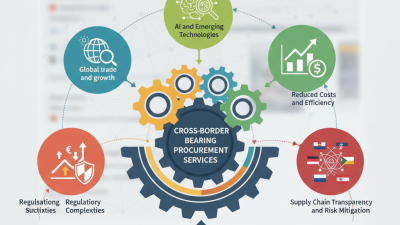
Global Bearing Supply Chain Solutions is not merely a purchasing program for bearings, seals, and related industrial components. It is a coordinated system connecting demand planning, qualified manufacturers, inspection, warehousing, transportation, and technical support. In practice, the network may begin with a factory’s monthly equipment forecast. It may end with a labeled box beside a maintenance technician. That connection matters because a delayed bearing can stop a conveyor, turbine, pump, or production line.
Reliable supply chain solutions depend on practical experience and documented controls. Suppliers should be evaluated through production capability, material records, quality certifications, and delivery history. Incoming inspections may check dimensions, surface condition, packaging, lubricant protection, and identification codes. Digital tracking can then link each batch to its supplier, inspection result, storage location, and shipment date. Clear data helps teams respond when demand changes or a component performs poorly. Safety stock also deserves careful calculation. Too little creates shortages, while too much increases aging, storage costs, and unnecessary waste.
Yet the model is not flawless. Forecasts can be wrong. Port delays happen. A polished dashboard may hide incomplete supplier information. For this reason, responsible providers combine technology with human review and honest communication. They explain lead times, limitations, and replacement risks before problems become urgent. The strongest Global Bearing Supply Chain Solutions are therefore measurable, transparent, and adaptable. They support reliable operations without promising perfect certainty. That restraint is important. Trust grows when performance is documented, exceptions are acknowledged, and continuous improvement remains part of the plan.
Global bearing supply chain solutions connect every stage from steel production to equipment maintenance. Steel mills provide controlled alloy grades, clean material, and documented heat-treatment data. These details influence fatigue life, dimensional stability, and operating reliability. Experienced buyers should verify certificates, batch numbers, and inspection records before approving production material. Small gaps can become expensive failures.
OEMs require bearings that match exact load ratings, tolerances, lubrication conditions, and installation methods. A reliable supply process links engineering drawings with production planning and quality checks. It also tracks changes carefully, because an unnoticed specification update may affect assembly performance. Communication matters. Not every delay comes from manufacturing. Sometimes, unclear demand forecasts create the problem.
MRO operations need a different response. Maintenance teams often need replacement bearings quickly, sometimes during a night shift. Distributors can support this need through regional inventory, packaging controls, and accurate stock information. They should protect products from moisture, impact, and incorrect labeling during storage. Digital tracking helps, but it is not flawless. Data may be outdated, and physical counts still deserve attention. A practical global network balances mill capacity, OEM schedules, MRO urgency, and distributor flexibility without sacrificing traceability.
Global bearing supply chain solutions connect engineering, sourcing, production, warehousing, and delivery across several regions. In 2023, one leading bearing manufacturer reported SEK 103.6 billion in sales. This figure shows the scale of industrial demand, but it does not represent the entire global bearing market.
At this level, supply chain planning requires more than moving boxes. A factory may need sealed bearings, precision components, lubricants, and testing equipment within strict production windows. Regional warehouses can reduce delivery delays, while digital inventory systems help track batch numbers, stock levels, and replacement cycles. Local technical support also matters because incorrect installation can shorten bearing life. Sales value alone cannot prove supply chain quality. That distinction deserves attention.
Tips: Compare suppliers by delivery reliability, technical support, traceability, and total operating cost. Keep safety stock for critical equipment, but review it regularly. Too much inventory quietly increases storage expenses. Too little creates urgent shipments. Forecasts can also be wrong, especially during energy, transport, or raw material disruptions. Pilot a regional plan before expanding it worldwide. Personally, I would measure missed deliveries and unplanned downtime monthly, not just annual sales.
A reliable bearing supply chain begins with measurable quality, not attractive packaging. ISO 492 defines tolerance limits for dimensions, running accuracy, and rotation performance. These limits matter during shaft fitting and housing assembly. A small error can create noise, heat, or uneven loading. Technicians should verify bore diameter, outside diameter, width, and radial runout with calibrated instruments. Keep the inspection records traceable.
ISO 281 provides the basis for calculating L10 bearing life. L10 represents the operating life that 90% of identical bearings can reach. Ten percent may fatigue earlier. The basic equation uses dynamic load rating and equivalent load. Ball and roller bearings use different exponents. Simple math, but not simple conditions.
Real equipment adds dust, poor lubrication, shock loads, and misalignment. These factors can shorten calculated life. I have seen supply plans trust catalog figures too much. That is a weakness. Incoming checks should include seal condition, rust marks, lubricant cleanliness, and storage humidity. Packaging cannot repair careless handling. Suppliers and users should compare ISO 492 inspection results with ISO 281 assumptions before approving a shipment. A bearing may meet tolerance requirements and still fail early when installation practice is poor. Fancy forecasts do not replace clean fits, correct preload, and documented maintenance.
What Is Global Bearing Supply Chain Solutions?
Global bearing supply chain solutions connect demand planning, sourcing, production, and delivery across multiple regions. The goal is not simply to move products faster. It is to keep the right bearing specifications available when factories, maintenance teams, and distributors need them.
Sales and Operations Planning, or S&OP, creates a shared operating view. Sales teams provide demand signals, while operations checks capacity, lead times, and inventory levels. A monthly review can expose practical issues, such as a sudden order increase or delayed port clearance. Forecasts remain imperfect. They should be tested against actual consumption, not treated as fixed promises. A simple dashboard can track open orders, stock coverage, supplier performance, and urgent shipments.
Multi-sourcing reduces dependence on one production route. Qualified suppliers in different regions can support continuity when capacity changes or transportation becomes unstable. However, adding suppliers also creates more audits, drawings, quality checks, and communication points. More options mean more work. Technical specifications must stay consistent, especially for load ratings, tolerances, materials, and packaging. Regional warehousing then places inventory closer to demand. A warehouse near a manufacturing corridor may shorten delivery time and reduce emergency freight. Stock placement still requires discipline. Excess inventory can age, while weak replenishment rules create empty shelves. Experienced planners review these trade-offs with real shipment data and warehouse feedback.
Regional warehousing and multi-sourcing decisions are strongly influenced by logistics infrastructure, customs efficiency, and delivery reliability. The chart uses 2023 World Bank Logistics Performance Index scores for selected markets, measured on a 1–5 scale.
Higher scores indicate stronger overall logistics performance. In S&OP planning, these differences can support decisions on safety stock, supplier diversification, and the location of regional distribution warehouses.
What Is Global Bearing Supply Chain Solutions?
Digital Resilience: IoT Monitoring, Traceability, and Counterfeit Control
Global bearing supply chain solutions now rely on connected evidence, not shipment promises. In practical warehouse reviews, small data gaps often appear between receiving, storage, and dispatch. IoT sensors can record temperature, vibration, humidity, and handling shocks during transit. Alerts help teams inspect sensitive lots before damage spreads.
Traceability becomes useful when each bearing carries a secure identity linked to its batch, production date, inspection record, and movement history. A digital ledger can show who scanned the item and when. It should also preserve manual checks, because sensors sometimes lose power or connect poorly. No system is flawless. That weakness needs honest review.
Counterfeit control works best through layered verification rather than one clever feature. Staff can compare packaging details, dimensions, markings, and digital records at receiving. A cryptographic code may strengthen authentication, but it cannot replace trained inspection. Suspicious mismatches should trigger quarantine and documented escalation under applicable procedures. Supply managers can use dashboards to measure scan coverage, alert response time, and unresolved discrepancies. The difficult part is consistency. A perfect pilot means little if busy sites skip scans. Reliable programs need clear ownership, independent audits, and regular improvement based on real failures.
| Supply Chain Area | Data Dimension | Required Data or Measurement | Reference Value or Control Rule | Digital Resilience Benefit |
|---|---|---|---|---|
| Product Identification | Item and lot identity | Part number, bearing type, size, clearance class, manufacturing lot, serial number, and packaging unit | Use a unique identifier for each serialized unit or a controlled lot identifier where individual serialization is not required. Identification should remain readable throughout handling and storage. | Improves recall accuracy, inventory visibility, and product verification without relying on paper records. |
| Traceability | Chain of custody | Event type, identifier, timestamp, facility or geolocation, custody status, and transaction reference | Record every material handoff, receipt, inspection, relocation, installation, return, and disposal event using synchronized timestamps. | Creates an auditable history and reduces uncertainty during delays, disputes, or emergency sourcing. |
| IoT Condition Monitoring | Vibration | Overall vibration velocity, acceleration, frequency spectrum, crest factor, and sensor location | Vibration velocity is commonly reported in mm/s RMS. Alarm limits must be selected according to machine type, mounting condition, operating speed, and ISO 20816 evaluation principles. | Detects imbalance, misalignment, looseness, lubrication problems, and developing bearing damage before functional failure. |
| IoT Condition Monitoring | Temperature | Bearing housing temperature in °C, ambient temperature, rate of temperature change, and operating load | Use a site-specific alarm threshold and rate-of-rise rule. A temperature trend should be evaluated together with speed, load, lubrication condition, and ambient temperature. | Supports early-warning alerts and helps distinguish normal operating heat from abnormal friction or lubrication loss. |
| Lubrication Management | Lubricant condition and service history | Lubricant type, batch or lot, application date, replenishment quantity, relubrication interval, and contamination observations | Do not mix lubricants unless compatibility has been verified. Relubrication intervals should be calculated from speed, load, temperature, contamination, and operating conditions. | Reduces premature failures caused by incorrect lubricant selection, over-greasing, under-greasing, or contamination. |
| Storage and Inventory | Environmental exposure | Storage temperature, relative humidity, package condition, corrosion status, storage location, and stock age | Follow the applicable technical storage instructions. Use a controlled environment, inspect packaging integrity, and apply first-in/first-out or manufacturer-defined shelf-life rules. | Protects against corrosion, lubricant degradation, packaging damage, and avoidable stock write-offs. |
| Inventory Planning | Demand and criticality | Historical consumption, equipment criticality, lead time, supplier reliability, safety stock, and downtime cost | Classify bearings by operational criticality and calculate reorder points using demand variability, replenishment lead time, and the required service level. | Balances working capital against the risk of production stoppage and long replenishment cycles. |
| Counterfeit Control | Authentication status | Serialized code, secure label or digital token, scan result, inspection record, and verification history | Flag duplicate identifiers, invalid codes, altered packaging, inconsistent dimensions, abnormal markings, and unexpected supply routes for manual inspection. | Prevents unverified products from entering production and strengthens evidence for investigation or quarantine. |
| Quality Inspection | Dimensional and visual conformity | Bore diameter, outside diameter, width, radial internal clearance, surface condition, marking quality, and packaging condition | Measure against the applicable product drawing, tolerance class, and inspection plan. Record calibrated equipment identification and inspection date. | Creates objective acceptance evidence and detects substitution, damage, or specification mismatch. |
| Installation and Maintenance | Installation quality | Mounting method, fit, heating method, applied force, alignment, shaft and housing condition, and installer record | Apply force only to the ring being fitted. Use controlled tools and documented procedures appropriate to the bearing design and application. | Reduces damage from improper mounting, excessive force, misalignment, and contaminated work practices. |
| Predictive Maintenance | Health score and failure risk | Trend deviation, alarm state, operating hours, load profile, maintenance history, and estimated time to intervention | Use condition-based thresholds validated against site history. A health score should be treated as a decision-support indicator, not a guaranteed remaining-life value. | Prioritizes inspections and replacement work according to actual asset condition rather than fixed calendar intervals alone. |
| Cybersecurity | Data integrity and access control | User identity, device identity, access rights, firmware version, audit log, encryption status, and backup status | Use least-privilege access, authenticated devices, encrypted communication, time-synchronized logs, and documented backup and recovery procedures. | Protects monitoring data from tampering and maintains operational visibility during cyber incidents. |
| Performance Governance | Supply chain resilience KPIs | Traceability coverage, scan compliance, counterfeit alert rate, stock-out frequency, inventory accuracy, supplier lead-time variance, and unplanned downtime | Set targets by asset criticality and risk tolerance. Review trends monthly and investigate abnormal changes rather than relying only on single-period results. | Converts digital records into measurable improvements in availability, quality, responsiveness, and risk control. |