A DIN Standard Bearings Supplier should be judged by more than a catalogue and a competitive quotation. Global buyers need dimensional accuracy, traceable materials, stable lead times, and clear technical support. A bearing that looks correct on a drawing may still fail to match the housing, shaft fit, or operating load. Small details matter.
DIN and ISO documents provide a practical basis for checking specifications. DIN 625 addresses dimensions for specified rolling-bearing types, while ISO 281 sets methods for calculating dynamic load ratings and rating life. These are technical standards, not market forecasts. For 2026 purchasing plans, buyers should compare market figures only when the report states its geography, product scope, and research date. Otherwise, the numbers may appear precise but tell little about a real sourcing decision.
Factory evidence helps close that gap. Ask for dimensional inspection records, material certificates, batch traceability, and clear confirmation of the applicable standard and revision. A supplier should also explain what it cannot guarantee. That matters. No source material was provided to verify a named expert’s exact quotation, so attributing one here would weaken reliability. Instead, buyers can use the standards themselves as the technical reference and request documented answers from each shortlisted supplier. Check the details before committing.
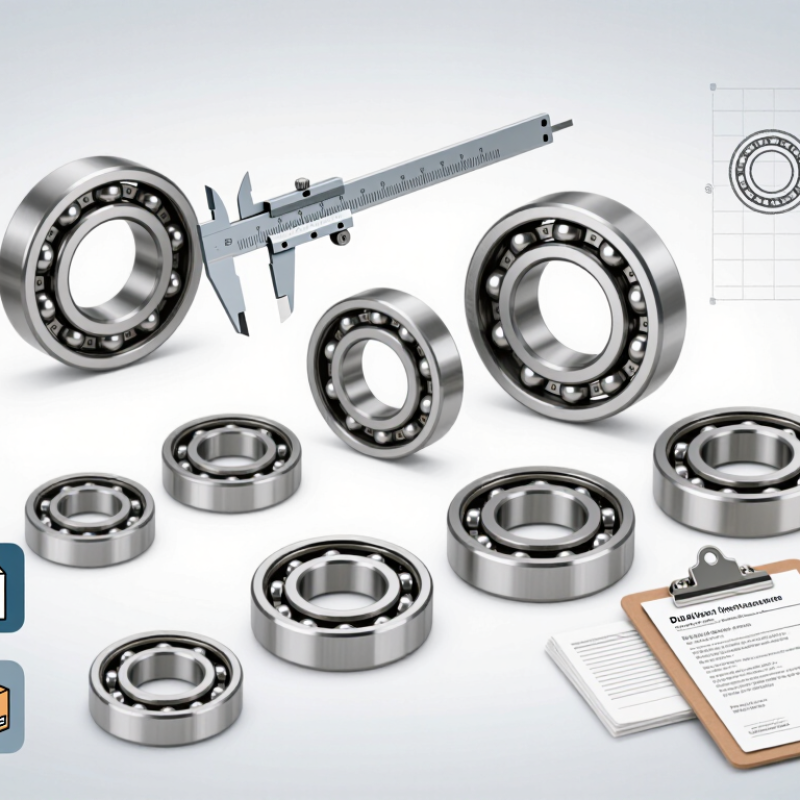
DIN standard bearings give engineers a shared language for selecting and replacing components. For example, DIN 625-1 specifies boundary dimensions for single-row deep-groove ball bearings. These dimensions help buyers check shaft fit, housing space, and interchangeability across equipment. A standard does not guarantee bearing life or manufacturing quality.
Bearings support rotating shafts in pumps, conveyors, machine tools, and electric motors. Their fit and condition affect vibration, friction, and maintenance needs. The U.S. Department of Energy’s 2014 sourcebook, Improving Motor and Drive System Performance, estimates that motor-driven systems use about 68% of the electricity consumed by U.S. manufacturing. Bearing choice is only one factor in motor efficiency, but poor alignment or lubrication can undermine reliable operation. Small details matter.
In procurement, confirm the exact DIN reference, dimensions, clearance, load direction, speed, and operating temperature. A bearing that fits on paper may still fail in a dusty, hot housing. Standards are not magic. They make specifications clearer, yet real service conditions deserve careful review. I would not treat a DIN label alone as proof of suitability; check drawings, duty cycles, and supplier inspection records before ordering.
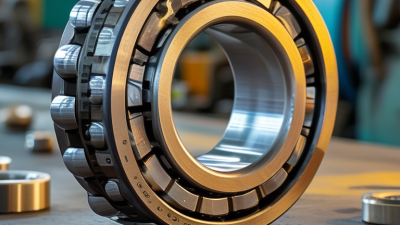
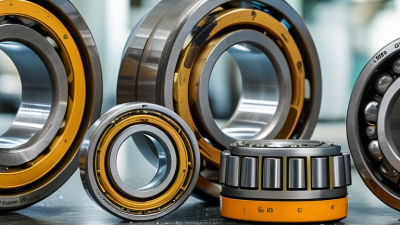
DIN bearing selection starts with type, dimensions, and operating duty—not catalog labels alone. Deep-groove ball bearings suit radial loads and moderate axial loads. Cylindrical rollers carry higher radial loads, while tapered rollers support combined loads. A common 6205 deep-groove bearing has standard boundary dimensions of 25 × 52 × 15 mm. Check the shaft, housing, and available clearance against the drawing. A nominal size match can still fail. Fit matters.
DIN ISO 15 covers boundary dimensions, while ISO 492 defines dimensional and rotational tolerances. ISO 281 sets bearing-life calculation methods; its basic rating life corresponds to 90% reliability, not a guarantee for every installation. The U.S. Department of Energy’s motor-systems sourcebook estimates that motors use about 70% of U.S. manufacturing electricity. That figure makes friction, lubrication, and alignment practical selection concerns in motor-driven equipment. Still, it cannot predict an individual bearing’s service life. Buyers should specify load, speed, temperature, sealing, and required tolerance class alongside the DIN reference. Small details are easy to miss, especially internal clearance. Verify them against the application drawing before ordering.
Matching a DIN-standard bearing starts with the operating point, not the catalog number. Confirm shaft and housing dimensions, then check radial and axial loads, speed, temperature, vibration, and contamination. A bearing that fits the seat may still fail early under shock loads or poor lubrication. ISO 281 calculates basic rating life from dynamic load and bearing capacity, but real service life can differ when installation or lubrication is poor. That gap deserves attention.
The U.S. Department of Energy’s Improving Motor and Drive System Performance sourcebook reports that motor-driven systems account for about 69% of U.S. industrial electricity use. This makes bearing selection relevant to equipment reliability and energy performance, though a bearing alone cannot guarantee savings. For each duty cycle, compare load ratings and speed limits, then specify sealing and lubricant for the actual environment. Dust near a conveyor or heat beside a furnace changes the choice. A tidy catalog match can still be wrong.
Tips: Record load, rpm, temperature, and contamination before requesting a quotation. Ask for the calculation basis and tolerances. Check the assembly fit, too; this step is easy to overlook.
Standard dimensions for selected DIN 625 single-row deep-groove ball bearings
Dimensions are shown in millimetres. Use the bore, outside diameter, and width to check shaft and housing fit; then verify load, speed, temperature, lubrication, and clearance against the application requirements. Dimensions alone do not determine operating suitability.
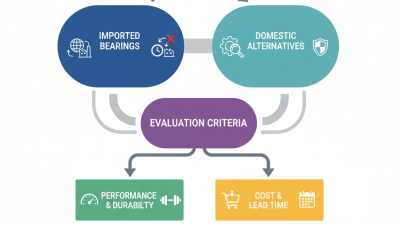
For global purchasing, evaluate a DIN bearing supplier by evidence, not catalogue breadth. Request dimensional inspection records, steel and heat-treatment specifications, and lot-level traceability. Check that the proposed bearing matches the drawing, load, speed, lubrication, and operating temperature. DIN conformity alone does not prove interchangeability; clearances and tolerances still matter. Ask for sample measurements.
Quality documents should be specific and verifiable. Review the supplier’s quality-management certification, calibration records, nonconformance process, and product test reports. Where fatigue life is relevant, ask how calculations use ISO 281 and your actual operating conditions. A polished certificate is not enough. I would compare one production sample with the drawing, though this step can be easy to skip when schedules tighten.
Logistics also affect supplier suitability. UNCTAD’s Review of Maritime Transport 2024 notes that over 80% of world trade by volume moves by sea, making transit planning and packaging important for overseas orders. The World Bank’s Logistics Performance Index 2023 assesses 139 economies across areas including shipment tracking and timeliness. Ask for realistic lead times, protective packaging details, and a plan for delayed shipments. Then compare landed cost, not unit price alone. Some uncertainty remains; forecast demand can change.
For global buyers, a DIN designation confirms dimensional requirements, not every aspect of bearing quality. Request inspection records for hardness, runout, clearance, and material batches. Ask whether measurements come from production lots or occasional samples. That distinction matters. A polished certificate can still leave gaps.
Lead times deserve the same scrutiny as specifications. UNCTAD’s Review of Maritime Transport 2024 reported maritime trade growth of 2.4% in 2023, while forecasting 2% growth for 2024 amid continued disruption risks. The World Bank’s 2023 Logistics Performance Index assessed 139 economies across customs, infrastructure, shipment arrangements, logistics competence, tracking, and timeliness. These reports describe the shipping environment, not any individual supplier’s performance. Request separate estimates for production, inspection, export packing, and transit. A single “four-week delivery” promise hides too much.
Compare air, sea, and consolidated freight against the bearing’s urgency and value. Check whether cartons use moisture barriers, clear part labels, and pallet protection suited to long transit. Confirm who arranges export documents, provides tracking, and handles damage claims before placing the order. Small details matter. I would also ask for recent on-time shipment data, though suppliers may define “on time” differently. A small trial order can reveal packing or communication problems; it may add cost, but spreadsheets rarely expose those.
| Supplier Type | Typical Product Fit | Quality Checks and Documents to Request | Indicative Lead Time | International Shipping Options | Best Suited For | Key Buying Consideration |
|---|---|---|---|---|---|---|
| Regional stock distributor in Europe | Common standard-size bearings, replacement orders, and urgent maintenance requirements | Request product traceability, inspection records, packaging details, and confirmation of the specified dimensions and tolerance class | In-stock items: typically 1–5 business days for regional delivery. Non-stock items: often several weeks, depending on the source | Road freight within Europe; air courier for urgent cross-border orders; parcel services for small quantities | Buyers prioritizing short replenishment times and smaller order quantities | Confirm physical stock, dispatch location, and whether the quoted delivery date includes customs clearance |
| European bearing manufacturer | Standard and application-specific bearings where production documentation and technical support are important | Ask for a valid quality-management certificate, material or batch traceability where applicable, dimensional inspection results, and a written specification review | Standard production orders: commonly 4–12 weeks; special designs or capacity constraints can extend this period | Road freight for nearby markets; air freight for time-critical orders; sea freight for larger overseas consignments | Buyers seeking direct technical communication, repeatable specifications, or regional production | Check minimum order quantities, production slots, and the scope of the quoted inspection documentation |
| Asia-based OEM manufacturer | Volume orders for standard configurations or products made to an agreed drawing and specification | Agree on acceptance criteria before production; request sample approval, inspection reports, batch identification, and pre-shipment inspection when appropriate | Production commonly takes 6–14 weeks, subject to order size, specification, and factory capacity | Sea freight is generally economical for larger shipments; air freight is faster for urgent or smaller consignments. Transit time depends on route, carrier, and customs | Buyers balancing unit cost with planned, consolidated purchasing | Allow time for production, export documentation, international transit, and import clearance; verify specifications independently |
| Specialist supplier for custom or low-volume requirements | Modified dimensions, unusual materials, special clearances, or low-volume requirements subject to engineering review | Request an approved drawing, revision control, material and heat-treatment records where relevant, inspection results, and written confirmation of deviations | Often 8–16 weeks or longer, depending on design approval, tooling, material availability, and inspection requirements | Courier or air freight for prototypes and small urgent lots; road or sea freight for larger production batches | Buyers with non-standard requirements or applications needing specification review | Obtain written approval of drawings, tolerances, and change-control responsibilities before placing the order |
Planning note: Lead times and transport options are indicative ranges, not supplier quotations or guaranteed transit times. Confirm current stock, production capacity, Incoterms, customs requirements, and delivery dates with the selected supplier. For standard selection, verify the applicable drawing and dimensional requirements; DIN 625-1 covers single-row radial deep-groove ball bearings, while ISO 492 specifies rolling-bearing tolerances.