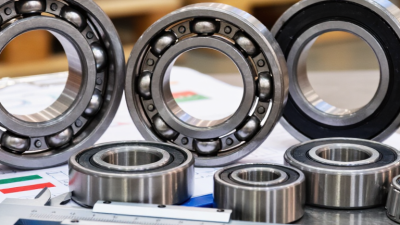
How to Custom Manufacture Thrust Ball Bearings in 2026?
How to Custom Manufacture Thrust Ball Bearings in 2026?
Thrust Ball Bearings Custom Manufacturing begins with the application, not a standard catalog number. Axial load, rotational speed, temperature, shaft orientation, and available installation space must be measured carefully. A bearing supporting a vertical turntable faces different stresses from one inside a compact actuator. Small differences matter.
Dr. Tedric A. Harris, a respected authority and author of Rolling Bearing Analysis, stated, “The life of a rolling bearing is dependent upon the fatigue strength of the material.” This principle still guides serious bearing development in 2026. Material selection, raceway geometry, ball conformity, cage design, and heat treatment must work together. Stainless steel may resist corrosion, while bearing steel often provides stronger fatigue performance. The correct choice depends on evidence, not habit.
A reliable custom program normally includes load calculations, CAD modeling, prototype machining, dimensional inspection, and endurance testing. Engineers should check axial stiffness, friction torque, noise, lubrication behavior, and temperature rise. Clean assembly is critical. One microscopic particle can leave a visible raceway mark.
No design is perfect.
Manufacturers should also review ISO-based quality procedures, traceability records, and supplier controls. These details help customers verify repeatability between production batches. However, calculated service life remains an estimate, especially under shock loads or poor lubrication. That limitation deserves honest attention. The strongest custom solution combines engineering experience, controlled manufacturing, measured test results, and a willingness to revise the design when real operating data disagrees.
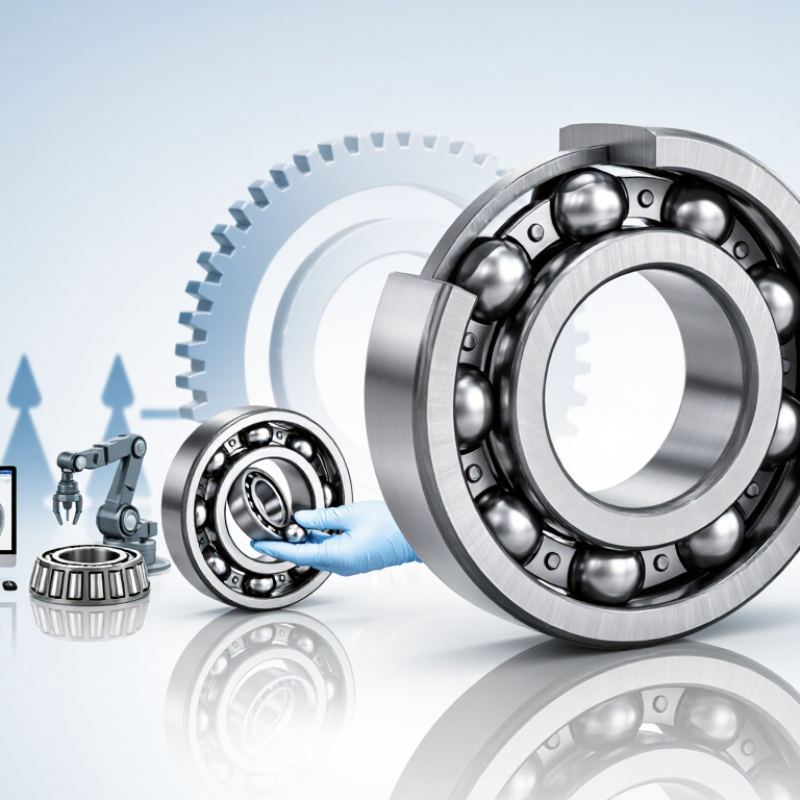
Thrust Ball Bearings: Structure, Functions, and Customization Options
How to Custom Manufacture Thrust Ball Bearings in 2026?
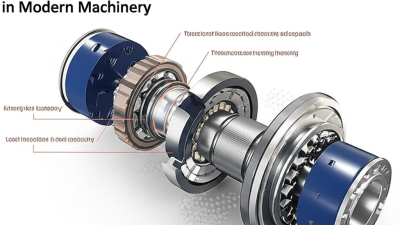
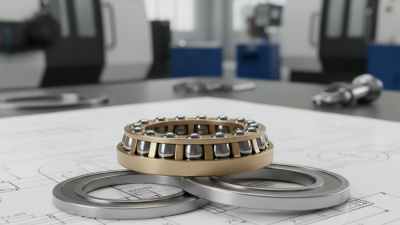
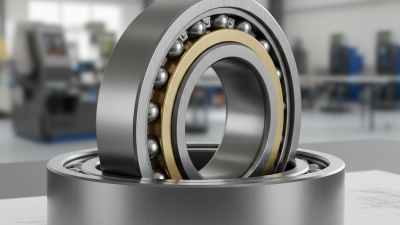
Thrust ball bearings support axial loads along a shaft, unlike radial bearings that mainly carry side loads. Their structure includes a shaft washer, housing washer, ball set, and cage. Hardened steel provides strength, while stainless steel suits humid or corrosive environments. Ceramic balls may reduce weight and friction in demanding applications. The washers must remain flat and accurately aligned. Even slight warping can create uneven contact, heat, and early failure. In real production, designers sometimes focus too much on load capacity. Speed, lubrication, temperature, and installation accuracy matter just as much.
Customization begins with the operating conditions. Engineers can adjust bore diameter, outside diameter, ball size, cage material, internal clearance, and preload. Special washer profiles can improve stability under fluctuating axial forces. Seals or protective shields may help control contamination, although they can increase friction. Manufacturing should include hardness testing, dimensional inspection, surface roughness checks, and rotational noise testing. A practical design review should also examine shaft deflection and housing support. This step is often overlooked. That mistake deserves reconsideration.
Tips: Share load, speed, temperature, lubrication, and mounting details before requesting a quotation. Provide drawings with tolerances, not only basic dimensions. Ask for inspection records and sample testing. Prototype evaluation can reveal unexpected noise or heat before volume production. A bearing that looks perfect on paper may still need adjustment in actual equipment.
Defining Performance Requirements for a Custom Thrust Bearing
How to Custom Manufacture Thrust Ball Bearings in 2026?
Defining performance requirements must come before selecting steel, seals, or cage design. Specify the axial load in newtons, operating speed, temperature range, and expected service hours. ISO 281 provides the basic rating-life method for rolling bearings. However, real life can be shorter when contamination, shock loading, or poor lubrication appears. A 2024 industrial bearing market report by Fortune Business Insights estimates the global market exceeded USD 120 billion in 2023. This scale hides a practical issue: standard catalog data cannot represent every custom operating condition.
Measure the installation space carefully. Record shaft diameter, housing diameter, allowable height, mounting orientation, and shaft runout. A thrust bearing may carry a high static load but still fail from misalignment. ISO 76 static-load calculations help prevent permanent deformation, while grease selection should match speed and temperature. For high-speed applications, ask for torque, vibration, noise, and cage stability data. A neat specification is not always a correct one. In design reviews, engineers sometimes overestimate load and underestimate contamination.
Tips: Build a requirement table before requesting quotations. Include load cycles, peak loads, lubricant type, cleanliness level, and inspection limits. Request dimensional tolerances, material certificates, and test records. Validate one prototype under simulated duty cycles. Then inspect raceway marks, temperature rise, and axial runout. Research and Markets’ 2024 bearing outlook also identifies predictive maintenance as a major industrial direction. Adding vibration monitoring may reveal damage earlier, but sensor data needs skilled interpretation. Calibration is easy to overlook.
Testing, Certification, and Delivery of the Finished Bearing
Custom thrust ball bearing production in 2026 should end with evidence, not promises. Each batch needs dimensional inspection, raceway roughness checks, hardness testing, axial runout measurement, and torque verification. Material certificates should trace steel from heat number to final packing. ISO 76 supports static load evaluation, while ISO 281 guides rating-life calculations. These standards help engineers compare designs under real operating loads. However, calculated life can differ from field performance. Contamination, mounting errors, and poor lubrication still create surprises.
Certification must match the application. An ISO 9001-based quality system strengthens process control and corrective actions. The 2023 ISO Survey recorded more than 1.2 million ISO 9001 certificates worldwide, showing how widely documented quality systems are used. For each shipment, request a certificate of conformity, inspection report, material records, and test results. Packaging also matters. Clean corrosion protection, sealed bags, shock-resistant cartons, and clear lot labels protect the bearing before installation. Delivery schedules should include inspection time, not only machining time. A missed test can quietly delay an entire production line.
Tips: Define acceptance limits before sampling begins. Ask for raw measurement data, not only pass-or-fail statements. Confirm whether testing uses the finished bearing or separate samples. Keep one retained sample from every critical batch. This small step helps investigate noise, wear, or early failure later. My own review would not treat a perfect report as proof of perfect service; field feedback still deserves attention.