Top Bearing Technical Consultation Services in China?
China’s bearing sector serves automotive plants, machine-tool builders, wind farms, and countless production lines. Yet selecting a bearing is only part of the engineering task. Incorrect fits, contaminated grease, shaft misalignment, and overlooked vibration can shorten service life before a machine reaches its expected load. Bearing Technical Consultation Services help teams investigate these risks using application data, inspection findings, and maintenance records.
Fortune Business Insights’ Bearing Market report estimated the global market at USD 132.5 billion in 2024 and projected USD 213.8 billion by 2032. This broad market figure covers bearings, not consultation services. Still, it signals the scale of equipment and decisions that depend on bearing performance. ISO 281 also provides a framework for calculating dynamic load ratings and rating life; it cannot replace analysis of real operating conditions.
Reliability expert John Moubray wrote, “Maintenance is ensuring that physical assets continue to do what their users want them to do.” His principle fits bearing work well. A useful consultation should connect calculations to what technicians actually see: a hot housing, uneven wear marks, or grease darkened by contamination. Small clues matter. No single report or calculation settles every case, either. Buyers comparing providers in China should look for clear methods, documented findings, and recommendations tied to their machine’s speed, load, lubrication, and environment. That is where careful technical review earns its value.
What Bearing Technical Consultation Services Include
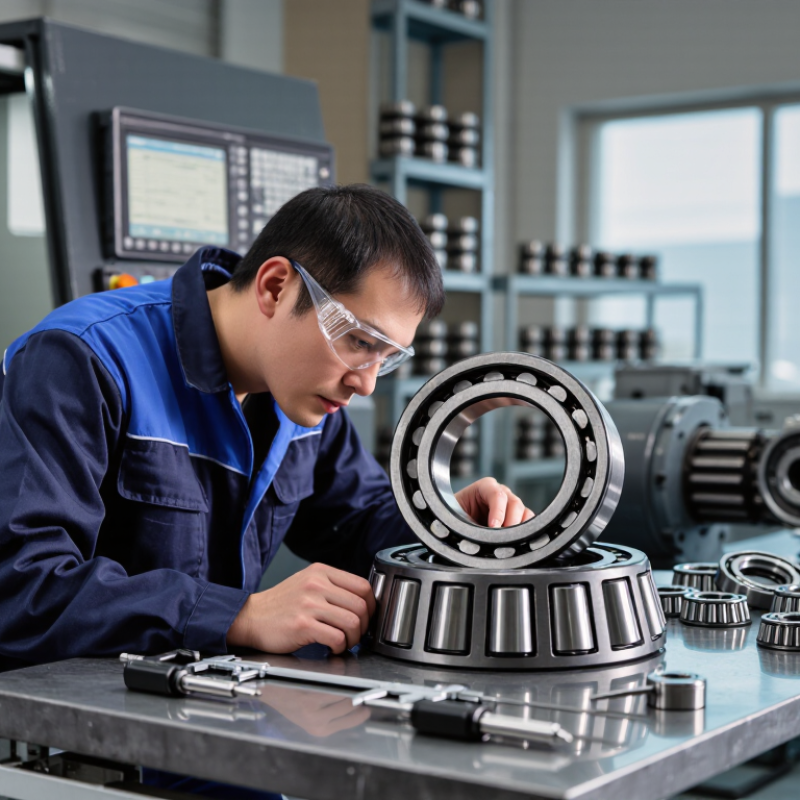
Bearing technical consultation covers more than choosing a part number. A consultant reviews the load, speed, temperature, vibration, shaft fit, housing, and operating environment. On a shop floor, that may mean checking a noisy fan bearing, measuring shaft runout, and inspecting grease for water or metal particles. Small details matter.
Selection is only one part. Services can include lubrication planning, installation guidance, condition monitoring, failure analysis, and maintenance training. ISO 15243:2017 provides a framework for classifying rolling-bearing damage, helping teams distinguish fatigue from wear, corrosion, or handling damage. The U.S. Department of Energy’s 2014 report, Improving Motor and Drive System Performance, estimates that motor-driven systems use about 68% of electricity consumed by U.S. manufacturing. A bearing issue can therefore affect more than the bearing itself. It may raise friction, heat, and energy use. Measurements help.
A useful consultation should connect findings to practical actions: verify alignment, set clearance, choose a suitable lubricant, and record vibration trends. Recommendations should also explain uncertainty. A single vibration reading cannot prove a bearing is failing; operating speed and mounting conditions can distort the result. I’d want a consultant to say what the evidence supports—and what still needs checking.
How Bearing Consultants Support Selection, Design, and Troubleshooting
Bearing consultation starts with operating conditions, not a catalog number. A consultant asks about radial and axial loads, shaft speed, duty cycle, temperature, and available space. Small details matter. A pump running near 1,800 rpm in a warm, dusty room may need a different arrangement from an intermittently used conveyor. Consultants compare bearing types, internal clearance, fits, and lubrication needs against the real duty.
Design support can include checking shaft and housing tolerances, mounting methods, and heat expansion. A few measurements can expose a problem. For example, a tight housing fit may reduce internal clearance after installation. Consultants can review drawings and operating data, then explain trade-offs instead of offering a part number alone. Their calculations still depend on accurate inputs, so assumptions should be recorded and checked on site.
When a bearing overheats or becomes noisy, troubleshooting should follow evidence. Vibration readings, lubricant condition, installation photos, and failure surfaces can help distinguish misalignment from contamination or inadequate lubrication. Replacing the bearing may not solve the cause. Even a careful diagnosis can miss a changing load or an assembly error. A practical consultant will state what remains uncertain and suggest a monitored test, such as recording temperature and vibration after reassembly.
Which Industries Use Bearing Consultation Services in China
In China, bearing consultation services are used across automotive, wind power, rail transport, and heavy manufacturing. Automotive plants may need advice on bearing fits, noise, and heat around production lines. Wind farms often seek support for large bearings exposed to changing loads, moisture, and difficult maintenance access. Rail operators focus on vibration, service life, and inspection intervals. Conditions vary widely.
Machine-tool workshops consult specialists when spindle accuracy or operating temperature changes. Mining and construction companies need guidance for equipment facing dust, impact, and heavy loads. Food-processing plants may ask about washdown exposure, corrosion, and lubrication choices. Robotics and agricultural machinery bring different challenges, including compact layouts and seasonal workloads.
A consultation can review operating data, installation practices, and failure patterns. Still, a tidy spreadsheet may miss a real-world issue, such as misalignment during a rushed repair. Recommendations should be checked against actual site conditions.
Tips: Bring load, speed, temperature, and maintenance records to the discussion. Photos of worn parts can help, too. Share what has already been tried, including unsuccessful fixes. Advice is only as useful as the details provided.
Key Criteria for Evaluating Bearing Technical Service Providers
Top Bearing Technical Consultation Services in China?
Choosing a bearing technical service provider in China starts with evidence, not polished claims. Ask whether engineers have hands-on experience with your bearing type, operating speed, load, and lubrication conditions. A provider should explain its diagnostic method and show sample reports with clear measurements and assumptions. Ask for evidence.
Useful consultation connects field observations to engineering analysis. For example, technicians may check shaft alignment, housing fit, lubricant condition, vibration, and operating temperature. They should state which instruments they use and when calibration was last verified. Good advice distinguishes a confirmed fault from a likely cause, then recommends a practical next test. That distinction matters.
Evaluate response times, site support, language clarity, and follow-up after installation. Request a relevant case history while protecting other clients’ confidential data. Compare providers by technical depth, not by the length of their equipment list. A short call can reveal gaps, though it cannot prove field performance. Even a careful assessment may miss a changing load pattern, so ask how recommendations will be reviewed when conditions change.
Key Criteria for Evaluating Bearing Technical Service Providers in China
Suggested evaluation weighting (%) for comparing technical consultation services. These are planning weights, not survey findings or ratings of specific providers; adjust them to match your application and procurement priorities.
How to Choose a Bearing Technical Consultation Service in China
How to Choose a Bearing Technical Consultation Service in China
A useful consultation starts with your operating conditions, not a generic product recommendation. Share shaft speed, radial and axial loads, temperature, lubricant, contamination level, and expected service life. Ask how the consultant checks assumptions and supports recommendations with calculations, inspection records, or test results. For example, a shaft running near a dusty production line needs different sealing advice from one operating in a clean, high-speed machine. Specifics matter.
Check whether the team can investigate failures as well as select bearings. Request a sample analysis covering wear patterns, mounting fit, lubrication, vibration, and alignment. The U.S. Department of Energy’s Operations & Maintenance Best Practices Guide reports that predictive maintenance can save 8–12% compared with preventive maintenance. A consultant should explain which monitoring methods suit your equipment, rather than promise savings without evidence. Ask about response times, report clarity, and follow-up after installation. Good advice is measurable. Still, no diagnosis is perfect when operating records are incomplete; that limitation should be stated plainly.
Tips: Prepare photos, drawings, failure history, and lubricant details before the first call. Ask for a written scope, named technical responsibilities, and clear deliverables. Compare the reasoning, not just the fee. If an answer sounds certain before the consultant has examined your conditions, pause and ask what evidence supports it.