Leave Your Message

What Is a Ceramic Hybrid Bearings Supplier?

A Ceramic Hybrid Bearings Supplier provides bearings with steel rings and rolling elements made from silicon nitride, a combination used in applications demanding speed, electrical insulation, or reduced wear. A supplier may manufacture these components or source them, then help specify dimensions, cage materials, lubrication, clearances, and operating limits. The details matter. A bearing fitted to a high-speed motor faces different heat, load, and lubrication conditions from one used in a pump or machine tool. A catalog match is not always an engineering match.

The U.S. Department of Energy’s 2014 technical report, Improving Motor and Drive System Performance: A Sourcebook for Industry, estimates that motor-driven systems use about 68% of U.S. industrial electricity. That figure describes the wider motor system, not bearing savings. Still, it explains why reliability and efficiency attract attention in motor design. A qualified Ceramic Hybrid Bearings Supplier should provide traceable product information, application guidance, and evidence supporting stated performance. Buyers can also compare life calculations under ISO 281 and failure terminology under ISO 15243. Ask about ceramic-ball grade, steel quality, seals, lubricant, and inspection records. Then check whether the answer fits the actual duty cycle. Sometimes the overlooked detail is lubrication. Ceramic elements do not make a bearing immune to poor installation, contamination, or incorrect preload. Supplier claims deserve careful review, too; the right choice depends on measurable operating conditions, not a material label alone.

What Is a Ceramic Hybrid Bearings Supplier?

What Defines a Ceramic Hybrid Bearings Supplier?

A ceramic hybrid bearings supplier is more than a source of parts. It helps buyers match ceramic rolling elements and steel rings to real operating conditions. That means asking about speed, load, temperature, lubrication, and contamination before recommending a bearing. A useful supplier can explain how silicon nitride balls differ from steel balls, and where that difference matters. Not every application benefits from a hybrid design.

Clear specifications are essential. Buyers should be able to confirm dimensions, material details, precision class, cage options, and inspection records. A supplier should also explain tolerances and limits in plain language, not rely on broad performance claims. Ask how parts are checked and what documents accompany an order. Small details matter. A shaft fit that seems minor on paper can affect heat, vibration, and service life. Even a complete datasheet may leave practical questions unanswered, so technical support should be willing to discuss the actual machine and its duty cycle. The right choice is not always the most advanced one; sometimes the application data is incomplete, and that uncertainty deserves attention.

Which Components Combine Si₃N₄ Balls with Steel Rings?

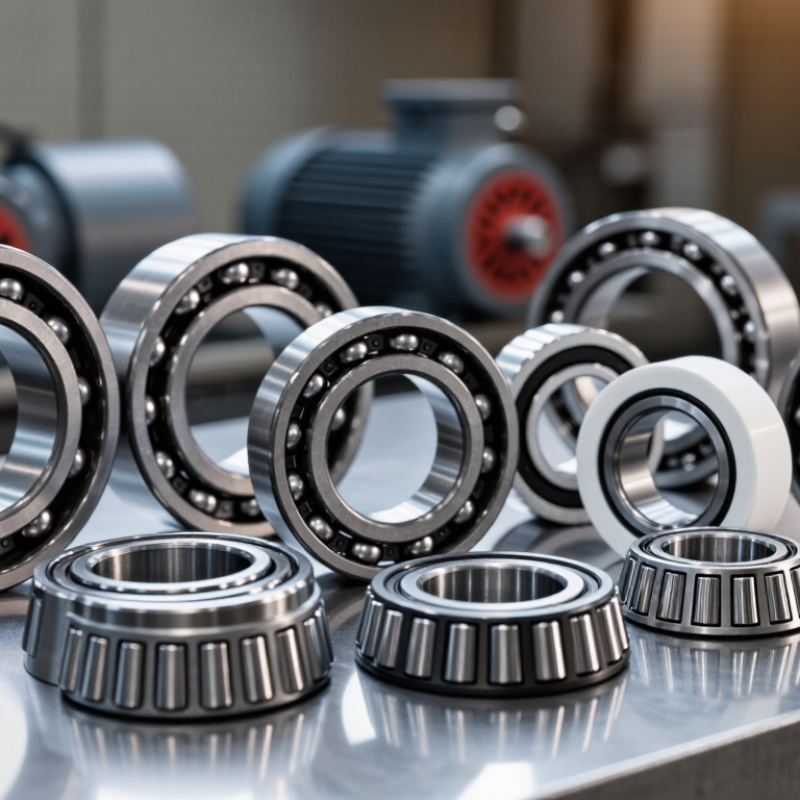
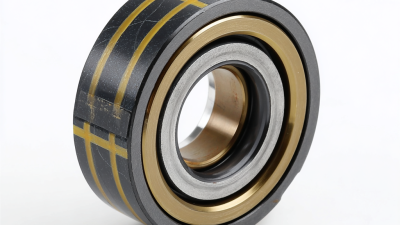
A ceramic hybrid bearing pairs silicon nitride (Si₃N₄) balls with steel inner and outer rings. The balls roll along precision-ground raceways, while the rings provide mounting surfaces and transfer loads to the shaft and housing. A cage spaces the balls and guides their movement. Its material depends on speed, temperature, lubrication, and operating conditions. Small details matter.

Common configurations include deep-groove radial and angular-contact bearings. Deep-groove designs handle radial loads and some axial loads in either direction. Angular-contact types support combined loads, but installation orientation and preload require care. Shields or seals can help limit contamination; open designs may suit applications requiring lower drag or specific lubrication. Steel ring material and heat treatment should match the intended load and service conditions.

A knowledgeable supplier should specify ball grade, ring material, internal clearance, tolerance class, cage, and lubricant—not just the bore size. Ask for drawings and inspection records. A high-speed spindle may need controlled clearance and low-friction grease, while a pump may place greater emphasis on sealing and corrosion conditions. These choices are not interchangeable. One limitation is easy to miss: catalog figures cannot account for every shaft fit or temperature change. A fit can look right on paper. Then behave differently in service.

What Is a Ceramic Hybrid Bearings Supplier? — Which Components Combine Si₃N₄ Balls with Steel Rings?

Component Typical Material Role in the Bearing Supplier and Selection Considerations
Inner ring Bearing steel, commonly through-hardened or case-hardened depending on bearing design Supports the rolling elements and fits onto the shaft. Check bore size, fit, raceway geometry, hardness, and dimensional tolerances against the application requirements.
Outer ring Bearing steel, matched to the bearing design and operating conditions Provides the outer raceway and is typically fitted into the housing. Confirm outside diameter, width, raceway specification, and whether the design includes flanges or other features.
Rolling elements Silicon nitride ceramic (Si₃N₄) Roll between the steel raceways to carry load. Silicon nitride balls are lighter than steel balls and electrically insulating. Verify ball diameter, grade, quantity, and compatibility with the bearing’s load, speed, lubrication, and operating conditions.
Cage (retainer) May be pressed steel, brass, or an engineering polymer, depending on the bearing type and operating conditions Spaces and guides the balls; it is not normally the primary load-carrying component. Check cage material, guidance style, temperature limits, and compatibility with the lubricant and rotational speed.
Seals or shields (optional) Seal materials commonly include elastomers; shields are commonly metal Help limit contaminant entry and, for sealed designs, retain lubricant. Confirm whether the application needs open, shielded, or sealed bearings, and check seal material and temperature compatibility.
Lubricant Grease or oil selected for the bearing and application Reduces friction and wear and supports reliable operation. Specify lubricant type and fill requirements where applicable; suitability depends on speed, temperature, load, and environment.
Complete hybrid bearing Si₃N₄ balls combined with steel inner and outer rings Combines ceramic rolling elements with steel raceways in one bearing assembly. A supplier should confirm bearing type, dimensions, internal clearance or preload, accuracy class, lubrication, and traceable inspection documentation.

Key distinction: In a standard hybrid ball bearing, the balls are silicon nitride while the inner and outer rings are steel. The cage, seals, and lubricant vary by design and are not necessarily ceramic.

How Does Si₃N₄’s ~3.2 g/cm³ Density Compare with Steel’s ~7.8 g/cm³?

A ceramic hybrid bearings supplier provides bearings with silicon nitride rolling elements and steel rings. The density contrast is substantial: silicon nitride is commonly listed near 3.2 g/cm³, while bearing steel is about 7.8 g/cm³. ASM International’s Engineered Materials Handbook, Volume 4, covers silicon nitride properties; steel reference values are presented in ASM Handbook, Volume 1. Exact values vary with material grade and processing.

For equal volumes, silicon nitride weighs roughly 59% less than steel. A 10 cm³ rolling-element set would weigh about 32 grams in silicon nitride, compared with 78 grams in steel. That difference can reduce rotating mass and inertia, which matters in high-speed machinery. A lighter ball also places less centrifugal load on the raceway at a given speed. Useful, but not magic.

Density alone does not predict bearing life. A supplier should provide material and dimensional data, plus evidence of inspection and application testing. Ring geometry, lubrication, fit, temperature, and contamination still shape performance. Ask for the test conditions, not just a headline speed rating. It is easy to overread one number.

Which Bearing Tolerances and Grades Does ISO 492 Specify?

A ceramic hybrid bearings supplier should explain how ISO 492 relates to bearing accuracy. The standard sets dimensional and running accuracy tolerances for radial rolling bearings. It does not define ceramic material quality or bearing load capacity. Those details need separate specifications.

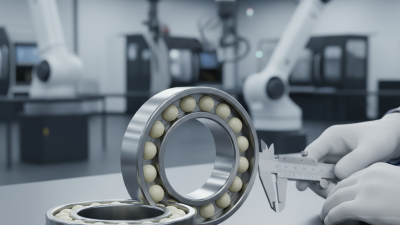
ISO 492 includes Normal and tighter tolerance classes, commonly identified as classes 6, 5, 4, and 2. Some catalogs use labels such as P6 or P5; check the supplier’s stated designation. The applicable limits depend on bearing type and dimensions. They cover features such as bore diameter, outside diameter, ring width, and radial or axial runout. Small differences matter. At a workbench, a few micrometres can affect fit, vibration, and heat.

A reliable supplier should provide inspection records tied to the ordered class, not just a general claim of “high precision.” Ask how measurements are taken and controlled, since temperature and measuring method can influence results. ISO classes help set expectations, but they do not guarantee identical performance in every assembly. That distinction is easy to overlook.

What Is a Ceramic Hybrid Bearings Supplier? Which Bearing Tolerances and Grades Does ISO 492 Specify?

ISO 492 specifies dimensional and running accuracy tolerances for radial rolling bearings. Its tolerance classes are shown here in order from the normal class to the tightest class. The chart uses ordinal ranks, not micrometre limits: actual permissible deviations depend on bearing type and nominal dimensions.

What Industries Use Hybrid Bearings for High-Speed Applications?

High-speed hybrid bearings serve machine-tool spindles, turbo-compressors, electric motors, and some aerospace systems. In a machining center, a spindle may rotate at tens of thousands of revolutions per minute while handling heat, vibration, and intermittent cutting loads. Silicon-nitride rolling elements are lighter than steel ones, which can reduce centrifugal forces at high speed. But the right bearing still depends on lubrication, preload, and operating temperature. Small details matter.

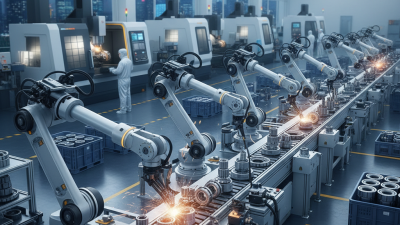
Factory automation is another application area. The International Federation of Robotics reported 541,302 industrial robots installed worldwide in 2023 in its World Robotics 2024 report. Robot counts do not measure bearing demand directly, but they show the scale of equipment using fast motors and precision drives. Energy systems also use high-speed shafts: IRENA’s Renewable Capacity Statistics 2024 puts global wind capacity at about 1,017 GW at the end of 2023. Gearbox designs vary, and direct-drive turbines have no gearbox, so bearing needs differ. That distinction is easy to overlook. A ceramic hybrid bearings supplier should be able to discuss speed limits, lubrication, electrical insulation, and application-specific testing—not just quote a maximum rpm.