Choosing an Industrial Machinery Bearings Supplier is not just a price comparison. A bearing may look small on a drawing, yet it carries steady loads, vibration, heat, and occasional misalignment. The right choice depends on the machine’s speed, operating environment, lubrication method, and expected service life. Details matter.
This guide introduces suppliers serving global buyers and the factors worth checking before requesting a quote. Compare product range, engineering support, documented quality controls, delivery capacity, and access to technical data. Ask for clear specifications, including dimensions, load ratings, tolerance classes, and recommended operating limits. Where relevant, review traceability records and discuss how the supplier handles inspection or product concerns. A polished catalogue is useful, but it cannot show how a bearing performs in your specific equipment.
Good suppliers ask questions about the application rather than pushing one product for every job. Buyers should also confirm lead times, packaging, replacement availability, and communication arrangements across regions. These practical details can matter as much as a headline price when a production line depends on dependable components. No supplier is perfect. Even careful comparisons leave some uncertainty, because real operating conditions can differ from test conditions. Use this overview as a starting point, then verify claims with current documents, technical discussions, and samples suited to your requirements.
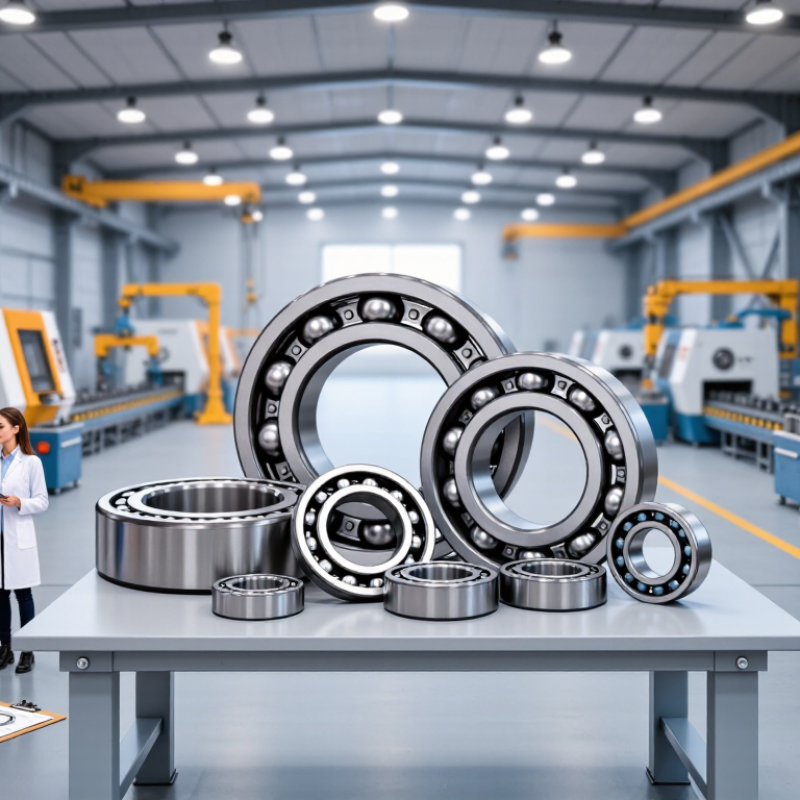
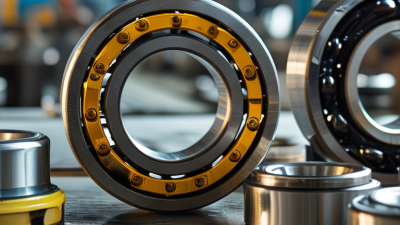
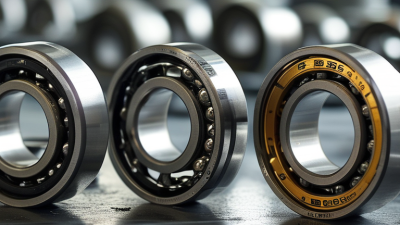
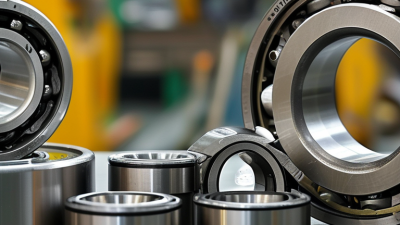
Industrial machinery bearings support rotating shafts, reduce friction, and guide motion. Deep-groove ball bearings handle radial loads and moderate axial loads in motors, pumps, and fans. Cylindrical roller bearings carry heavier radial loads in gearboxes and production equipment. Tapered roller bearings manage combined loads, often in heavy-duty drives. Small differences matter.
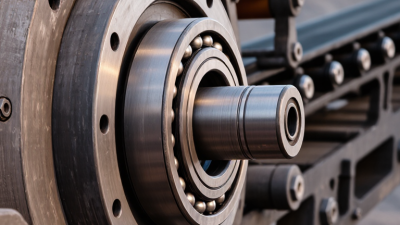
Spherical roller bearings tolerate shaft deflection and misalignment, making them useful in conveyors, crushers, and paper machines. Thrust bearings support axial force, such as the load on a vertical pump shaft. In each design, rolling elements move between raceways, limiting sliding contact. Lubrication, fit, sealing, and operating temperature all affect service life. A correctly sized bearing can still fail early if contamination or poor alignment is ignored.
For buyers, application details matter more than a catalog label. Shaft speed, load direction, vibration, and maintenance access shape selection. Check mounting dimensions, clearance, lubricant needs, and operating conditions with a qualified supplier. Measurements from a hot housing or noisy gearbox can reveal issues that paperwork misses. Selection is not always neat. A trial installation may expose assumptions in the original specification.
Global buyers evaluate industrial bearing suppliers on more than price and catalog size. The key question is whether a supplier can match the bearing to the machine’s load, speed, temperature, and operating environment. Ask for dimensional tolerances, material details, lubrication guidance, and inspection records. Clear answers matter.
Quality systems and traceability help buyers assess consistency between shipments. Review sample reports, lot identification, and procedures for handling defects. Then check practical readiness: production capacity, realistic lead times, export packaging, and responsive technical support. A polished catalog can still leave gaps. Sometimes a supplier’s documentation is uneven; discuss those gaps before placing a large order. A factory visit or sample trial may reveal details that a questionnaire misses, though neither guarantees future performance.
Tips: Share shaft dimensions, load conditions, operating speed, and temperature range. Request written specifications and sample inspection data. Compare suppliers using the same criteria, and verify critical claims independently where possible. Don’t treat the lowest quote as the safest choice. Ask who will answer technical questions after delivery.
Leading Industrial Machinery Bearing Suppliers
Leading industrial machinery bearing suppliers do more than ship standard parts. They help buyers match bearing type, clearance, cage material, and lubricant to actual loads, speeds, temperatures, and contamination. Ask for batch traceability, dimensional inspection records, and clear guidance on storage and installation. For a paper mill, for example, moisture protection and sealing details may matter as much as nominal load capacity.
ISO 281 defines basic bearing rating life using a 90% reliability reference, not a promise that every bearing will reach that life. The U.S. Department of Energy’s 2014 sourcebook reports that motor-driven systems account for about 68% of U.S. industrial electricity use. This makes dependable rotating equipment important, but the figure does not prove that a particular bearing supplier will reduce energy use. Compare technical support, delivery consistency, quality documentation, and total operating cost. No spreadsheet catches every vibration. Field feedback still matters, and buyers should review failures with suppliers rather than assume the original specification was perfect.
Tips: Share shaft speed, load direction, operating temperature, lubricant, and contamination risks before requesting a quotation. Confirm packaging and shelf-life requirements. Check one sample installation closely; small fit errors can become costly downtime.
| Supplier category | Typical bearing range | Common machinery applications | Relevant technical considerations | Useful buyer checks |
|---|---|---|---|---|
| Full-line industrial bearing suppliers | Commonly include deep-groove ball, angular-contact ball, cylindrical-roller, tapered-roller, and spherical-roller bearings. | Electric motors, pumps, gearboxes, conveyors, machine tools, and general industrial equipment. | Bearing selection depends on load direction, speed, operating temperature, lubrication, and required service life. | Confirm the exact bearing designation, dimensions, clearance, cage type, seals, and documented load ratings. |
| Roller-bearing specialists | Often focus on cylindrical, tapered, spherical, or needle roller bearings. | Heavy-duty gearboxes, steel-processing equipment, construction machinery, and industrial transmissions. | Roller-bearing designs vary in their ability to accommodate radial loads, axial loads, and shaft misalignment. | Request load-rating data, permissible misalignment details where applicable, and installation and lubrication guidance. |
| Precision-bearing suppliers | Precision-grade angular-contact ball, cylindrical-roller, and other machine-tool bearings. | Machine-tool spindles, precision rotary tables, and equipment requiring controlled runout or high rotational accuracy. | Accuracy class, preload, internal clearance, speed limits, and lubrication method can affect performance. | Check tolerance class, preload specification, inspection documentation, and suitability for the intended spindle speed. |
| Mounted-bearing and bearing-unit suppliers | Bearing inserts supplied in housings such as pillow blocks, flanged units, or take-up units. | Conveyors, fans, agricultural machinery, and equipment where a housed bearing assembly is required. | Housing material, shaft attachment, sealing, relubrication provisions, and mounting dimensions matter. | Verify shaft diameter, bolt pattern, housing dimensions, seal arrangement, and environmental protection requirements. |
| Custom and application-specific bearing suppliers | Modified standard bearings or engineered designs for specific dimensions, materials, seals, or operating conditions. | Special-purpose machinery, harsh environments, low-volume equipment, and replacement applications with non-standard requirements. | Design changes may affect interchangeability, manufacturing lead time, validation, and maintenance needs. | Provide drawings and operating conditions; confirm approval samples, change control, traceability, and replacement availability. |
Supplier categories describe common market capabilities, not ranked or named companies. Bearing range and performance vary by product; verify specifications for each application. ISO 281 covers dynamic load ratings and rating life, ISO 76 covers static load ratings, and ISO 492 specifies dimensional and running accuracy tolerances for rolling bearings.
Industrial machinery bearing suppliers are concentrated across East Asia, Europe, and North America. Buyers often compare production origin with nearby stockholding, not just factory location. A bearing made in one region may ship through a regional warehouse before reaching a plant. That extra stop matters when a line needs a replacement quickly. Ask suppliers where critical sizes are stocked, how often inventory is replenished, and whether shipment tracking covers the full route.
Distribution depends on more than distance. The UNCTAD Review of Maritime Transport 2024 reported that global maritime trade grew 2.4% in 2023, with growth projected at 2.7% for 2024. This matters because many industrial components travel by sea, then move inland by truck or rail. The World Bank’s Logistics Performance Index 2023 assesses factors including customs, infrastructure, tracking, and delivery timeliness. Buyers can use these factors to compare supplier networks, while also checking practical details such as export documents, packaging, and local technical support. A neat map can hide weak links. Port delays and uneven regional stock still complicate delivery estimates. A little skepticism helps.
Comparing industrial machinery bearing suppliers starts with the operating conditions, not the catalogue price. Buyers should share shaft dimensions, radial and axial loads, speed ranges, temperature changes, and likely exposure to dust or moisture. A bearing that looks correct on paper may fail early if lubrication or alignment is overlooked. Small details matter.
Ask suppliers for dimensional tolerances, load ratings, material specifications, and recommended lubrication intervals. Check whether test reports and batch traceability are available, and confirm how replacement parts are identified. For a conveyor running long shifts, for example, heat and contamination resistance may matter more than a slightly lower purchase price. Compare lead times and minimum order quantities too; a technically suitable bearing is less useful if replenishment is uncertain.
Where possible, compare samples against the same measurement criteria and operating requirements. Review how the supplier handles technical questions, changes in specifications, and reports of premature wear. Clear answers are useful. Vague promises are not. A spreadsheet helps, but it can hide assumptions about maintenance, installation quality, or actual load conditions. Buyers may not have every field measurement at the start, so record what remains uncertain and validate it before placing a large order.